
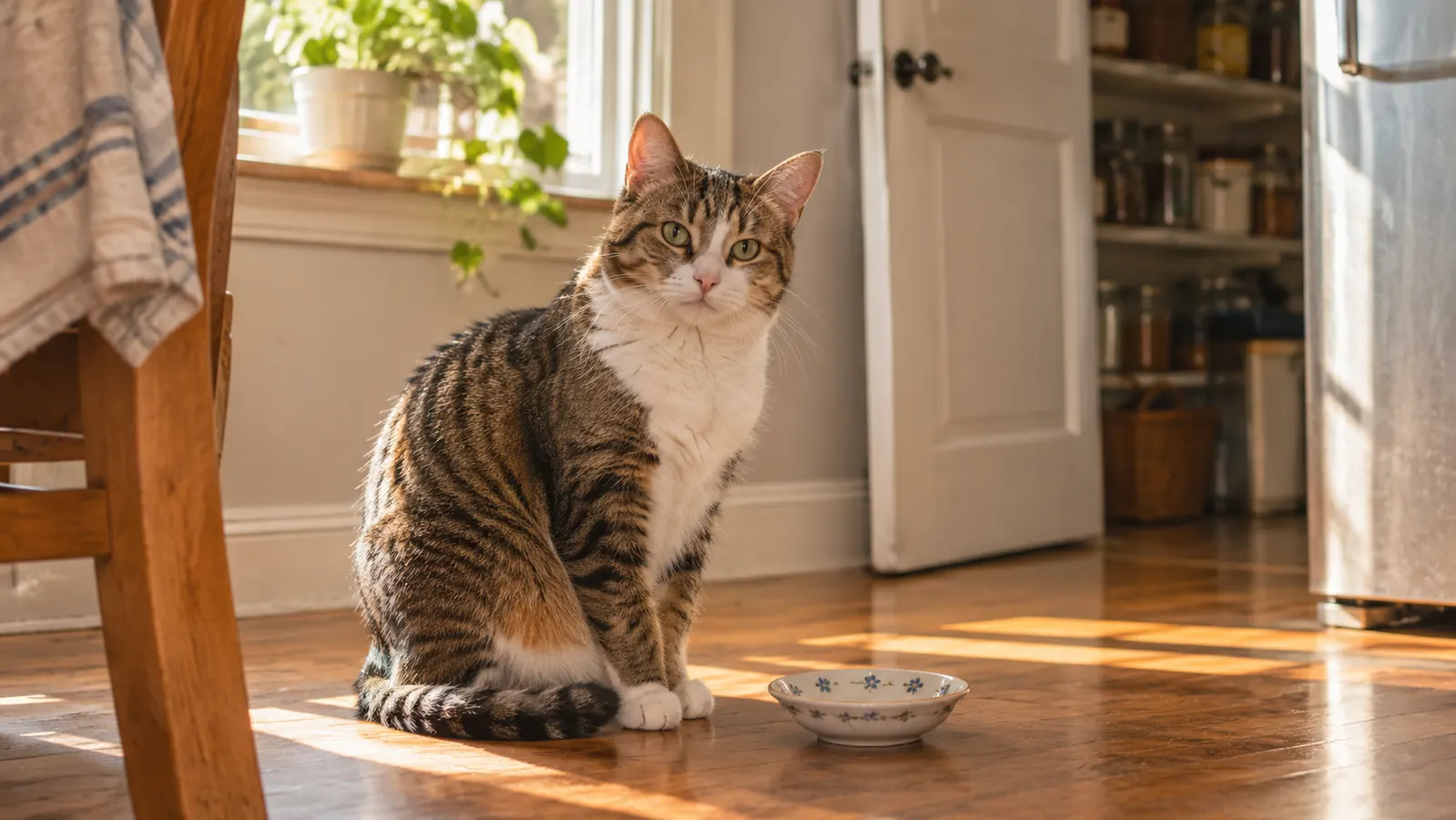
Nobody tells you that a hairball sounds like a cough before it sounds like anything else. For two winters I heard Juniper do that dry heave on the landing at four in the morning and assumed she was catching something. She was not. She was doing what an 8-year-old indoor tabby with a sensitive stomach does when she grooms more than her gut can move along. I spent 24 years behind the front desk of a small-animal clinic in Lexington, and I still had to be reminded of that by our own vet.
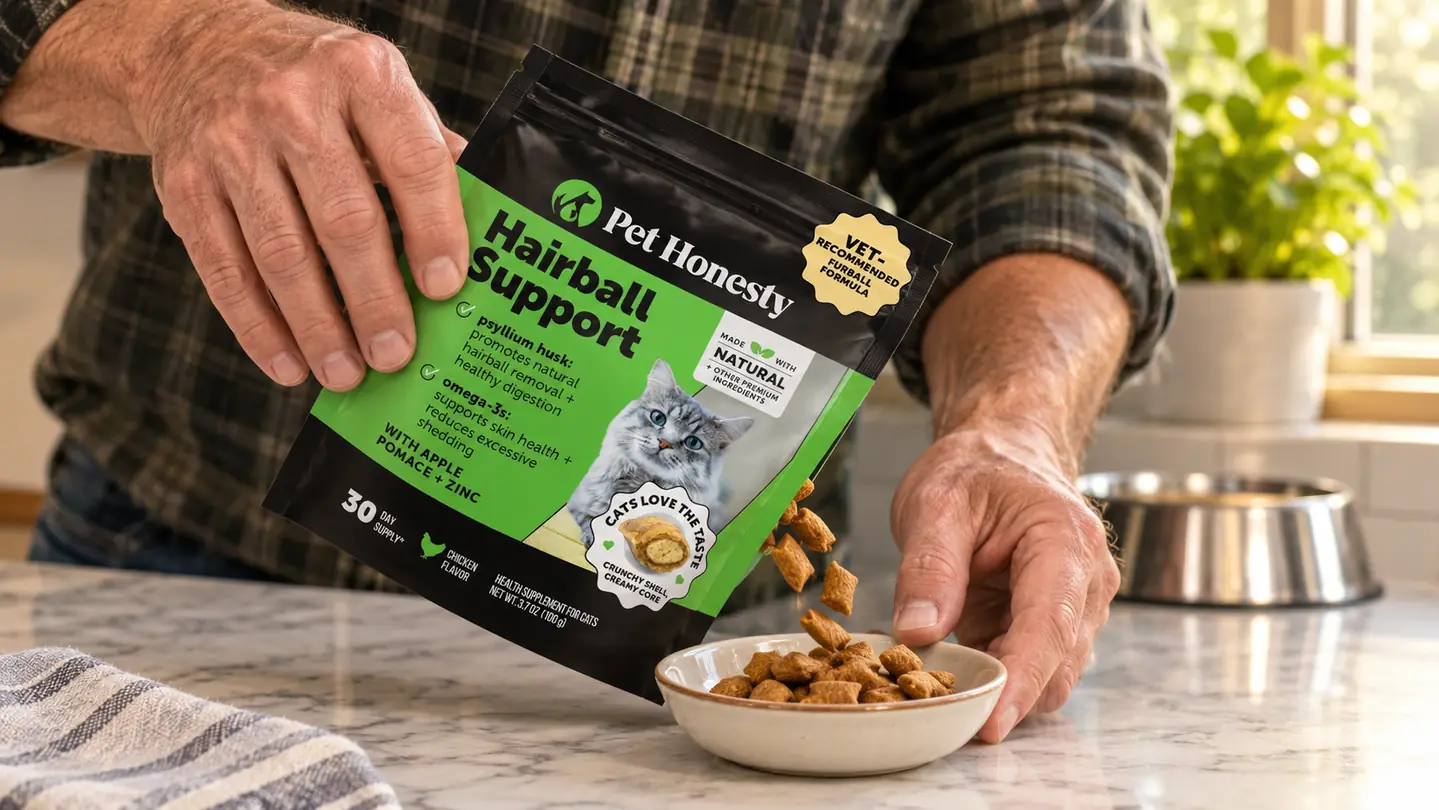
So when I finally sat down with a bag of Pet Honesty Cat Hairball Remedy Chews, I did what I used to do with every new product an owner set on the counter. I turned it over and read the back before I read the front. This is the honest version of that. It is not the version where everything works and the cat is cured. Pet Honesty makes a good product, it is not the right product for every cat, and I will tell you exactly which one Juniper turned out to be.
The Quick Verdict
A short, sensible fiber and coat chew that a fussy cat will actually eat. It reduced Juniper's hairball episodes by roughly half over four weeks, and it did nothing for the anxiety that drives half her grooming.
Amazon Check Today's Price →The Only Reason This Works in Our House Is That She Eats It
Chicken flavor, crunchy bites, and a six-ingredient fiber panel. If your cat will take a treat, you have cleared the hardest hurdle. Current price and the full ingredient list are on the listing.
Amazon Check Today's Price on Amazon →What I Actually Saw in the First Three Weeks
Juniper is 8, a gray tabby, 11 pounds, and she has the kind of stomach that lets you know within an hour when something disagrees with her. I started her on a Monday and put the chews out on a saucer beside her bowl instead of mixing them into her food. That was deliberate. If a cat walks away from a dish, I want to know it was the chew and not the kibble it was buried in. Twenty-four years of hearing owners say the same thing taught me that much.
She ate them. Not with any drama, not the way she goes after a piece of chicken off Ray's plate, but she ate them and came back for the second one. That is the whole ballgame with a cat and a supplement, and it is the complaint I heard most often at the desk. You can buy the best-formulated hairball product on the shelf and if the cat refuses it, you have bought a bag of expensive decorations. Half the products I used to ring up never made it past day three.
By the end of the second week I noticed the change I was actually watching for, which is not the absence of hairballs but the frequency of that dry heave on the landing. It went from two or three mornings a week to about one. By the fourth week I would have called it once a week and sometimes less, and that has held. She still coughs one up now and then. I want to be straight with you about that, because the reviews that tell you it stopped entirely are either very lucky or not paying close attention.
I keep a small notebook for this, the same way I used to jot down which foods came back with complaints at the clinic. Four weeks of entries, and the pattern was not what I expected. Week one, three heaves. Week two, two. Week three, one, and that one landed on a Sunday when the weather turned cold and she slept six hours under the radiator instead of moving around the house. Week four, one. Since then it has sat at about one a week, with a rough stretch in early March when visitors filled the house and she hid in the guest room and groomed herself raw. That week she had two. That was stress, not fiber, and it told me where the real problem lives.
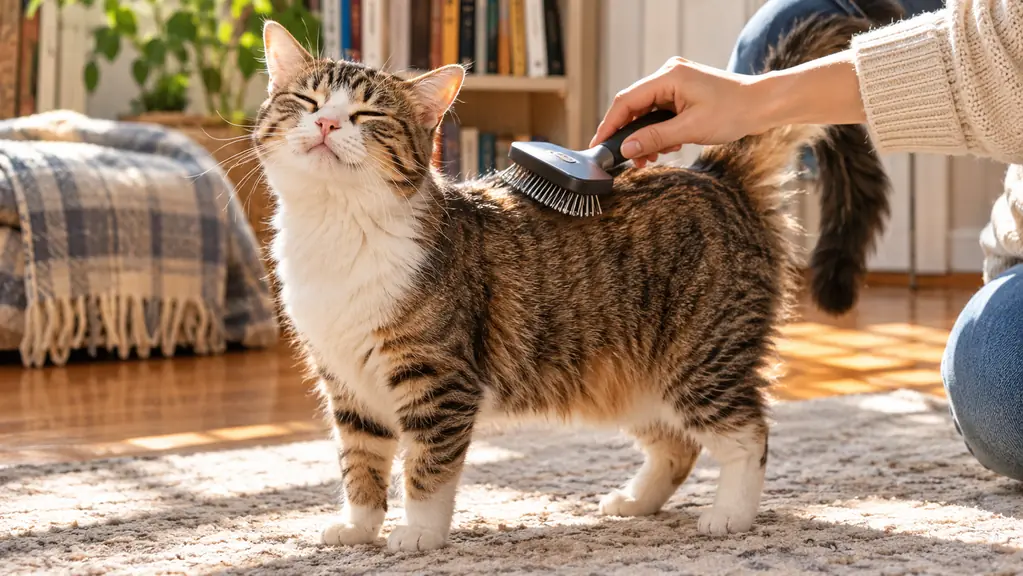
One honest caveat. Around the same time I started the chews, I also started brushing her twice a week instead of once, because the bag reminded me that swallowed hair has to come from somewhere. So I cannot hand Pet Honesty sole credit for the improvement. What I can tell you is that the direction of travel was right, the change was gradual rather than sudden, and it has held through a Kentucky spring when she sheds enough to build a second cat.
The Ingredient Panel Is Dull, and That Is the Compliment
Turn the bag over and the active list is short and unglamorous: psyllium husk, citrus pulp, apple pomace, zinc methionine, and omega-3s from fish oil and lecithin. If you have ever looked closely at a hairball product, you already know what the first three are doing. They are fiber. Fiber is what moves swallowed hair along through a digestive tract that would rather sit on it. That is not a controversial mechanism and Pet Honesty does not pretend it is one.
The zinc methionine and the fish oil are aimed at the other half of the loop, which is coat and skin. A cat with a dry, flaky coat grooms more, and a cat that grooms more swallows more hair, and around it goes. I have watched that cycle with Biscuit and his winter flaking, and it runs the same way in a cat. I am not a veterinarian and I am not going to tell you these chews repair a coat. I am telling you the formulation is pointed at the right two targets instead of scattering itself across nine.
What I appreciated is what is not on the list. The allergen line on the listing says non-GMO, and the active panel is short enough to read in one pass without looking anything up twice. After 24 years at a front desk, a boring panel is the one I trust. It was the products with eleven ingredients nobody on staff could pronounce that used to send me into the back to fetch the vet. Pet Honesty is not doing anything clever here, and clever is not what I want in a cat's digestion.
You can buy the best-formulated hairball product on the shelf and if the cat refuses it, you have bought a bag of expensive decorations.
The Picky Eater Problem Nobody Warns You About
Here is the part the listing slides past. These are crunchy bites with a dual texture, and the brand cites an independent feeding study where nine out of ten cats liked the taste. That is a genuinely good number. It is also not ten out of ten, and the one cat who says no is going to belong to somebody reading this. Juniper is a gravy licker. She leaves the chunks in the bowl, licks the liquid off them, and walks away with her tail in the air, so I fully expected to be in that tenth.
Here is how I test a new chew, and it has not failed me yet. One chew on a clean saucer, same time every afternoon, no kibble in sight. If a cat sniffs it and walks away twice in a row, I stop and try again in three days with the chew crumbled over a teaspoon of wet food. If that gets refused too, I stop buying. Juniper took hers off the saucer on the first afternoon, and that told me more than a week of mixing it into her bowl ever could. Mixed in, you never really know whether the cat ate the chew or ate around it, and I have met owners who spent months not knowing.
She was not in that tenth, and I think the chicken flavor carried it. But the texture is the real risk here and it deserves saying plainly. If your cat eats pate only, or has had teeth pulled, or turns her nose up at anything with a snap to it, buy the smallest size you can find and test it before you build a routine around it. There is nothing more discouraging than a pantry shelf holding a month of refused chews while your cat coughs on the landing.
The other thing I would flag is that fiber is fiber. When you add psyllium husk to a cat's day, some cats run a loose stool for the first few days while the gut adjusts. Juniper did not, but her stomach is more reliable than her attitude. If your cat already has a sensitive gut, or a history of flare-ups, start slower than the bag suggests and ask your vet about the pace. That is not a knock on Pet Honesty. It is simply what added fiber does, in a cat or in a person.
What These Chews Will Not Do
These are a fiber and coat supplement. They are not a laxative, they are not a treatment for over-grooming, and they will not fix a cat who is pulling fur out of her belly because the house was full of people for a week. Juniper's anxiety is real, it is separate, and it needs a separate answer. If stress grooming is the actual driver in your house, these chews will help you manage the output while you find something that addresses the cause.
The distinction I used to draw at the desk is this. A hairball comes up as a tight wad of fur, usually after a run of retching, and the cat is herself again within a minute. Food comes up as food, often soon after eating, and the cat may look unsettled afterward. If what you are finding on the rug is wet kibble rather than fur, fiber is not your answer and more of it can make a sensitive stomach worse. Bag it, note the times, and take the note to your vet. A written log is worth more in the exam room than a description from memory, and I say that as someone who spent years trying to reconstruct three weeks of episodes from a five-minute phone call.
And if your cat is bringing up food rather than hair, or doing it more than a couple of times a week, or losing weight, or going off her food, that is not a hairball problem and no chew on the market is going to solve it. Put the bag down and call your vet. I say that as the person who used to take those calls and who could hear in an owner's voice when they had waited three weeks longer than they should have.
How It Fits the Rest of the Routine
A 30-day supply is 3.7 ounces, which is a small bag, roughly the size of a paperback. It lives on the pantry shelf next to Biscuit's joint chews without taking over the shelf, and I like that it does not require refrigeration or a scoop or a syringe. The gel products I used to sell did all three, and the number of owners who quietly gave up on them was higher than anyone admitted.
The bag measures 2 by 5 by 7 inches, roughly the footprint of a hardback, and it stands on its own on the shelf. That sounds like a small thing until you have four half-empty supplement bags in a pantry. I keep a small plastic tub on the shelf and the chews go into that once the bag is open, mostly because Juniper worked out that a bag left at nose height on the counter is a bag she can knock onto the floor at three in the morning. The tub settled it. If you travel with your cat, decant a few days' worth into a labeled bottle rather than hauling the bag, and keep the label with it, because whoever is watching her will want to know what it is.
Small bag also means you will reorder more often than you expect. I did not set a reminder the first time and spent a week substituting a spoonful of plain pumpkin, which worked about as well as you would guess. Put it on your calendar the day the bag arrives. A 30-day supply disappears faster than you plan for in a house with two animals on the shelf, and if you are splitting the chews between cats, read the label for the daily amount rather than guessing from the size of the bag.
What I Liked
- Six active ingredients, all of them doing an obvious job: psyllium husk, citrus pulp and apple pomace for fiber, zinc methionine and fish oil for coat
- A crunchy chicken treat instead of a gel, so most cats take it without a fight
- Juniper's morning dry heave dropped from two or three times a week to about one
- Non-GMO per the listing, with an active panel short enough to read in one pass
- Works alongside a brushing routine rather than replacing it
- Small enough to store on the pantry shelf beside the dog's supplements
Where It Falls Short
- The crunchy texture is a genuine dealbreaker for pate-only cats or cats with dental trouble
- Added fiber can mean a loose stool for the first few days in a sensitive cat
- A 30-day supply is a small bag, so reordering comes around quickly
- Does nothing for stress-driven over-grooming, which is often the real cause
- Weeks, not days. If you want overnight results, this is not that
Who This Is For
If you have a cat who grooms a great deal, coughs up a hairball a couple of times a week, and will eat a crunchy treat, this is a sensible first thing to try. It is also the right pick if you want a fiber product you can hand out like a treat rather than a gel you have to smear on a paw, which is a fight I watched owners lose for years. And it suits a multi-cat house, because the bites are easy to portion and easy to keep separate from the dog's supplements on the shelf.
Who Should Skip It
Skip it if your cat is a pate-only eater, if she has had dental work that makes crunching uncomfortable, or if her hairballs come with vomiting, weight loss, or a change in appetite. Skip it if the grooming is clearly driven by stress, because you would be paying monthly to treat the symptom. And skip it if you are hoping for something that works by the weekend. Fiber takes weeks to shift a cat's cycle, and the coat side of the equation takes longer than that.
What I Would Ask My Vet Before Starting
Three questions, and I would ask all three before the first chew. First, is this much added fiber safe for my cat given her age and her kidneys. Second, does it interact with anything she is already taking, because psyllium does not live in a vacuum. Third, is there any reason to suspect something other than ordinary grooming, because hairballs in an 11-pound cat are usually a maintenance problem and occasionally are not. Write the answers down. You will forget by the next appointment.
That is the whole of my advice, and it is the same advice I gave across a front desk for 24 years. A supplement is a small nudge in a good direction. It is not a diagnosis and it is not a substitute for one. Pet Honesty makes a product I am comfortable keeping in the pantry, and Juniper is better on it than she was off it, and I would still tell you to make the phone call first. That order matters more than any bag on a shelf.
If Your Cat Will Take a Crunchy Treat, This Is Where I Would Start
Six ingredients, chicken flavor, and a fiber approach that worked on a fussy 8-year-old tabby. Read the label, ask your vet about the amount, and give it four weeks before you judge it.
Amazon Check Today's Price on Amazon →