
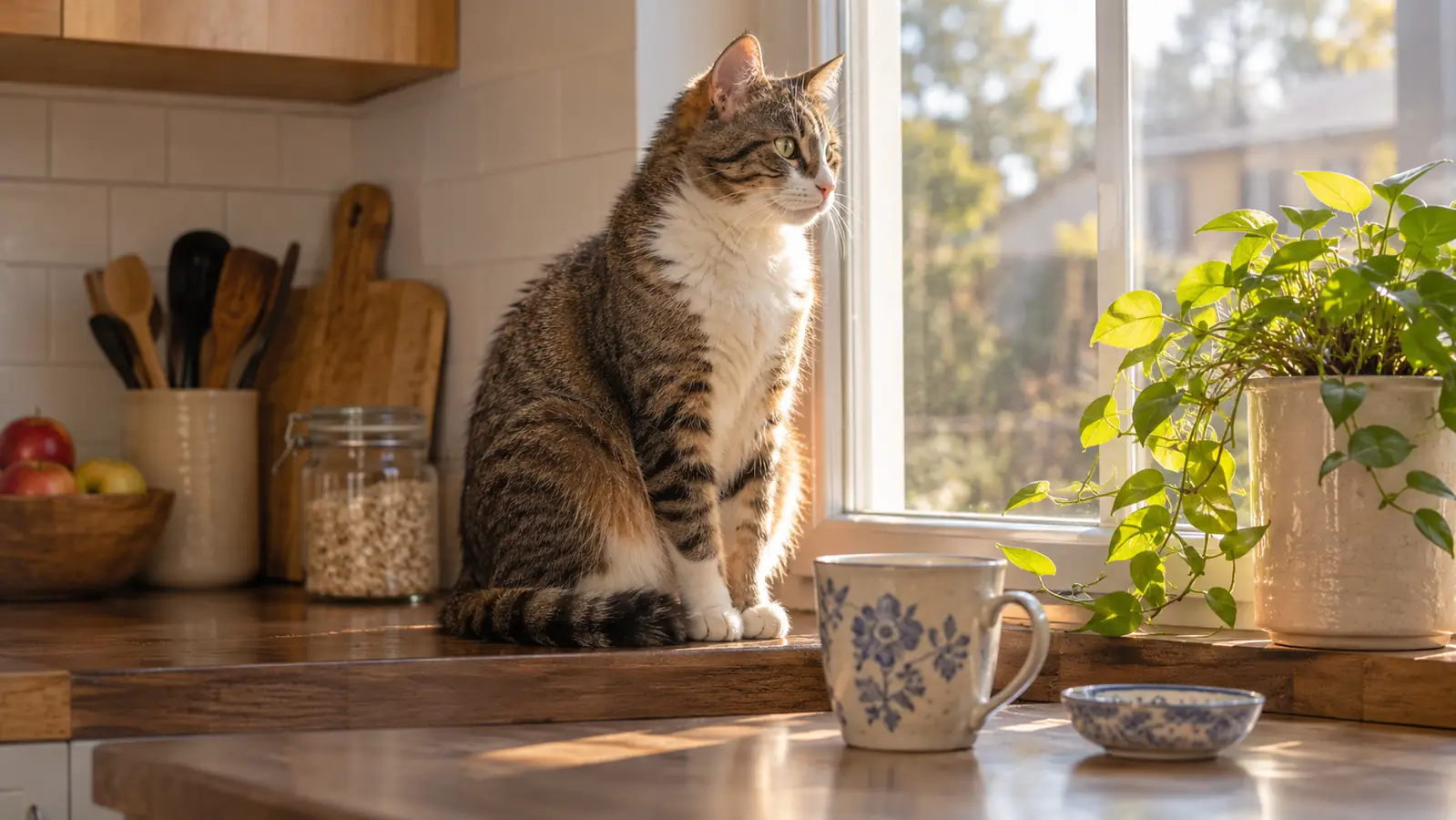
Juniper is eight years old, eleven pounds, and a gray tabby with a stomach that objects to almost everything. She also grooms as if it were her job, which means hairballs, and every one of them lands somewhere I have to scrub. I spent twenty-four years behind the front desk of a small-animal clinic in Lexington, so I have heard this question in every form it comes in, and I have cleaned up more of the aftermath than I care to count.
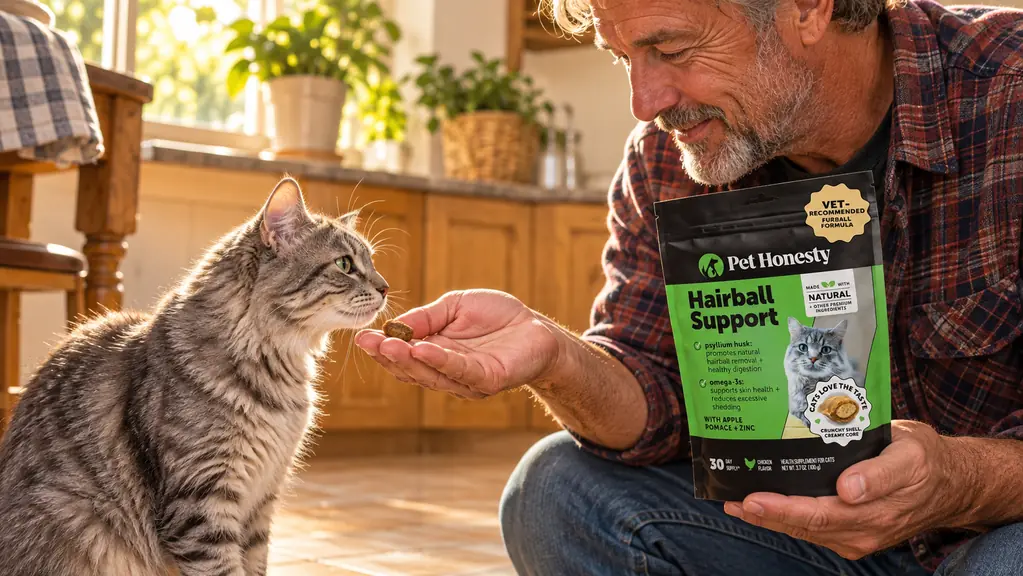
Here is the short answer before the details. Pet Honesty Cat Hairball Chews, the crunchy chicken-flavored bites, are the easier option for a cat that will eat a treat. You set one down, the cat eats it, and the whole transaction takes four seconds. Laxatone Gel is the easier option for a cat that will not. It is a lubricant gel from a tube, and it goes onto the cat whether she agrees to it or not, which is the entire point of it.
| Pet Honesty Hairball Chews | Laxatone Gel | |
|---|---|---|
| What it is | Crunchy chicken-flavored bites, 3.7 ounces, sold as a 30-day supply | A lubricant gel that comes in a tube |
| How you give it | Set it in the bowl or hand it over as a treat | A ribbon on the paw or nose to be licked off, or stirred into wet food |
| What is in it | Citrus pulp, apple pomace, psyllium husk, zinc methionine, and omega-3s from fish oil and lecithin | A petroleum-based lubricant, usually flavored with malt or tuna |
| How it works | Fiber sources that help swallowed hair keep moving through the gut | Coats the hair and the gut so hair slides out instead of balling up |
| Dose control | A set amount of bites per day, printed on the bag | You squeeze out a little more or a little less as the week demands |
| A cat that eats treats | Takes it as a reward and comes back for the next one | Still has to be smeared, which most cats tolerate and few enjoy |
| A cat that refuses everything | Nothing happens except wasted bites drying in the bowl | It gets in anyway, because you put it where she has to lick it off |
| Mess | A crumb or two on the floor | Greasy paw prints on the counter, the rug, and your sleeve |
| How long it lasts | Thirty days at the printed amount | A tube keeps going for weeks, so you are not restocking often |
| Anything beyond hairballs | The label also lists skin and coat support, antioxidant and immune support, and Non-GMO ingredients | Nothing beyond lubrication |
| Best for | Cats that will take a chewy bite and need daily upkeep | Cats that will not, or a cat in the middle of a bad shedding week |
| Familiarity at the clinic | A supplement you buy on your own | Something clinics have handed out for years and staff know well |
I scored each row on its own instead of handing the whole table to one side. A comparison that gives one product every line is selling something, not comparing it. There are five rows below where the gel wins outright, and I have a cat in this house who proves two of them.
Where Pet Honesty Hairball Chews Win
The chews win on the thing that decides whether a daily supplement ever gets used, which is whether the cat wants it. Pet Honesty makes these as a crunchy chicken-flavored bite, and in the company's own feeding study, nine out of ten cats ate them. Juniper is not a cat who approves of new things. She sniffed the first one for a good ten seconds, ate it, and has taken them since without a fuss. Four seconds, no towel, no wrestling match on the kitchen floor.
The second win is that the ingredients are doing more than one job. Psyllium husk, citrus pulp, and apple pomace are all fiber sources, and fiber is the part that helps swallowed hair keep moving through the gut instead of collecting there. Zinc methionine and the omega-3s from fish oil and lecithin are aimed at the coat, and a better coat sheds less, which means less hair goes down the throat in the first place. The label also lists skin and coat support, antioxidant and immune support, and Non-GMO ingredients. That is a fair amount of work for something that tastes like chicken.
The third win is the absence of mess. There is no ribbon of gel on the counter, no greasy paw print across the tile, and no cat walking away with an offended expression and a shiny nose. I put a bite in the bowl and the job is finished before I have topped off the water. In a house that runs on routine, that is worth more than it sounds. The pouch is small, about 2 by 5 by 7 inches, so it sits on the pantry shelf next to Biscuit's joint chews without taking up space.
Where Laxatone Gel Wins
The gel wins the cats who will not be reasoned with, and I have met plenty of them at the front desk. A cat who turns her nose up at a chewy bite will still lick a ribbon of malt-flavored gel off her own paw, because cats groom and grooming is not optional for them. It is the one delivery method that does not depend on appetite. It also wins on timing. When a cat is in the middle of a heavy shed and you are fishing hair out of the water bowl, a lubricant works on the hair that is already in there. A fiber chew is a slow, daily, preventive habit. The gel is the thing you reach for when the problem is already happening.
It wins on dose control and on familiarity too. You can squeeze out a little more during a bad week and a little less when things are calm, and the tube lasts for weeks, so you are not restocking constantly. And this is the gel clinics have handed out for years, which means your vet and the staff already know it, know the amount, and know what to watch for. When I worked that front desk, more tubes of it went home with clients than I could count, usually with a tech drawing a paw on a scrap of paper so nobody forgot how to use it. There is something to be said for the thing everyone already trusts.
If your cat will eat a treat, the hard part is already over
Pet Honesty Cat Hairball Chews come as a 3.7-ounce pouch sold as a 30-day supply, in chicken flavor, with fiber from psyllium husk, citrus pulp, and apple pomace plus omega-3s for the coat. Nine out of ten cats ate them in the company's feeding study.
Amazon Check Today's Price on Amazon →What Is Actually in Each One
These two products are not the same idea in different packaging. They take different routes at the same problem, and knowing which route your cat needs is most of the decision.
The chews are a fiber approach. Psyllium husk is the well-known one, a soluble fiber that takes on water and adds bulk, which is what helps everything in the gut keep moving in the right direction. Citrus pulp and apple pomace add more fiber on top of it. Zinc methionine and the omega-3s from fish oil and lecithin work on the coat itself, because a healthier coat sheds less and less shed hair is less hair for a cat to swallow while she washes her face. That is a slow, daily, preventive approach. It is not going to dissolve a hairball that is already formed.
Laxatone is a lubricant approach. It is petroleum based, and it coats the hair sitting in the stomach and the gut so that it slides through instead of clumping into a ball and coming back up on your carpet at two in the morning. It is not a fiber, and it does not change the coat at all. Think of it as a slip coat for hair that is already there.
Neither one treats the reason a cat overgrooms in the first place. If hairballs are showing up more than about once a month, or if the coat is thinning in patches, that is a conversation with your vet and not a supplement decision. I say that as the person who spent years booking those appointments. The chews and the gel both manage a symptom. They do not answer the question underneath it.
A lubricant moves the hair that is already in there. Fiber and a better coat mean less hair goes down in the first place. Those are two different jobs, and it helps to know which one you are hiring for.
What It Is Like to Give Both to a Cat
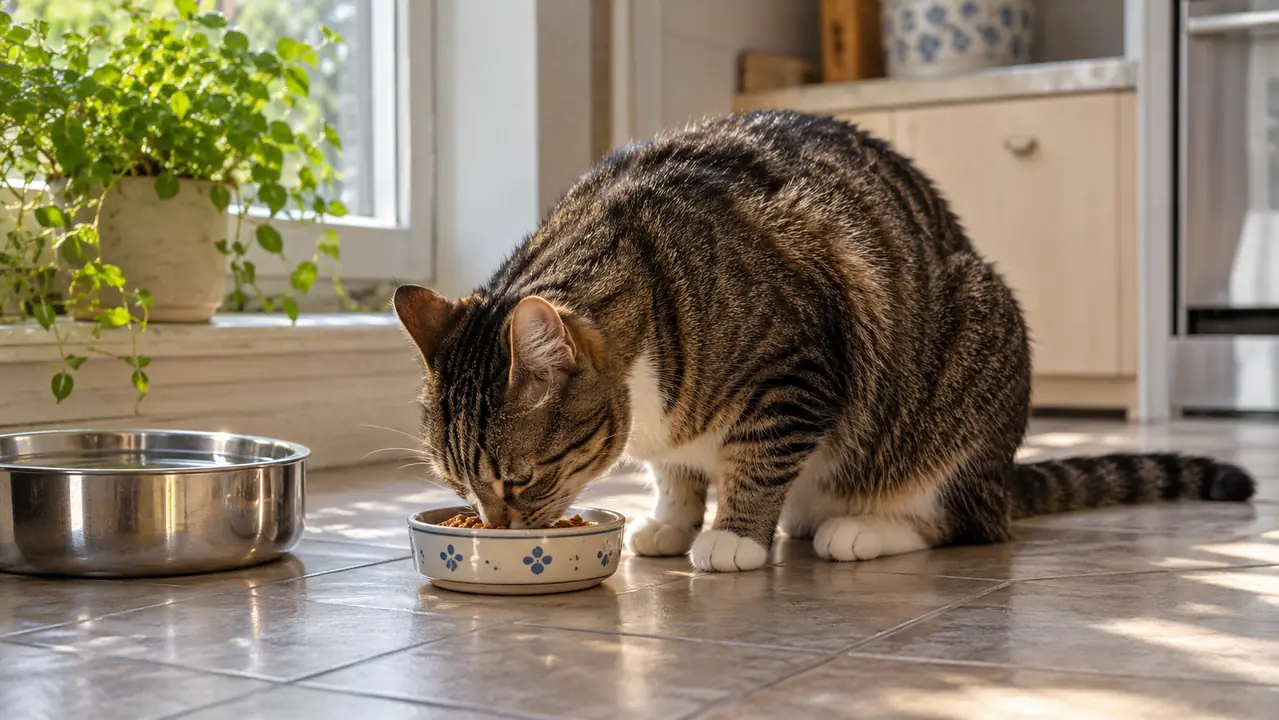
The chews are the easy half. Juniper gets hers in the morning while Biscuit is busy with his own breakfast, because a Labrador will absolutely investigate anything that smells like chicken and I am not interested in refereeing that. She crunches it, licks the bowl, and goes back to the windowsill. If I forget, she sits by the pantry and stares at me, which is as close as that cat comes to asking for something.
The gel is a two-person job in this house, or a one-person job with a towel and some patience. You squeeze out a ribbon and put it on the paw or the nose. She shakes the paw, licks it off, and then walks across the kitchen leaving little shiny prints. She is not wounded by any of this. She is simply unimpressed, and she holds it against me for about an hour. It works, though. When she was bringing up hair every few days one spring, the gel settled it inside of a week.
So I keep both. The chews are the everyday habit, because a thing I can hand over without a struggle is a thing that actually happens every day. The tube stays in the cabinet for shedding season and for the weeks when she is determined to prove a point about the new food or the visitors. That is not a knock on either product. It is just how a house with one cat in it tends to run.
What I Would Ask My Vet First
Ask how often is too often before you buy anything. Hairballs once in a while are normal for a cat who grooms. Hairballs weekly, or a cat who is off her food and lethargic with one, is a different story and needs a look rather than a chew. Ask about overgrooming too, since stress, skin trouble, and thyroid problems can all present as a cat who suddenly has more hair in her stomach than usual. Ask whether a petroleum-based gel is fine for long-term daily use in your cat, or whether it should stay an occasional thing. And if your cat is on any medication or has a sensitive stomach like mine, ask about the psyllium before you start, because added fiber can loosen stools if you are heavy-handed with it.
I would also ask whether the fish oil in the chews matters for a cat with food sensitivities, because it is a real ingredient and not a trace. Juniper has done fine on them. That does not mean every cat will, and I would rather you ask the question than assume.
What I Liked
- The cat eats it as a treat, so the daily habit actually sticks
- Fiber for hair plus omega-3s and zinc methionine for the coat in one bite
- Nine out of ten cats ate it in the company's own feeding study
- No gel on the paw, no greasy prints on the floor
- Thirty-day supply makes it easy to judge after a month whether it is helping
- Non-GMO, with skin and coat and immune support on the label
Where It Falls Short
- A cat who will not eat a chewy bite gets nothing from it
- Chicken flavor and fish oil rule it out for some cats with sensitivities
- Fiber takes weeks of daily use, not days
- Too much fiber at once can loosen stools
- It manages hairballs, it does not fix the overgrooming behind them
Who Should Buy Which
Buy the Pet Honesty chews if your cat already takes treats, if you want something you can hand over in four seconds, and if you are after the long game: less shedding, a better coat, and fiber that keeps the hair moving. Buy them if you have ever thrown away a tube because the cat hid under the bed every time you picked it up. A supplement you can actually deliver every day beats a better one sitting in the cabinet.
Buy the gel if your cat refuses anything new in the bowl, if you are in the middle of a heavy shed and need something working this week, or if your vet has already recommended a lubricant and you know it works in your house. Plenty of people keep both, and I am one of them. The chews do the daily work. The gel handles the emergencies.
The easier half of the job, in chicken flavor
If your cat will take a treat, start with the chews and give it a full thirty days before you judge it. Psyllium husk, citrus pulp, and apple pomace for the hair, zinc methionine and omega-3s for the coat, and a cat who thinks she is getting a snack.
Amazon Check Today's Price on Amazon →