
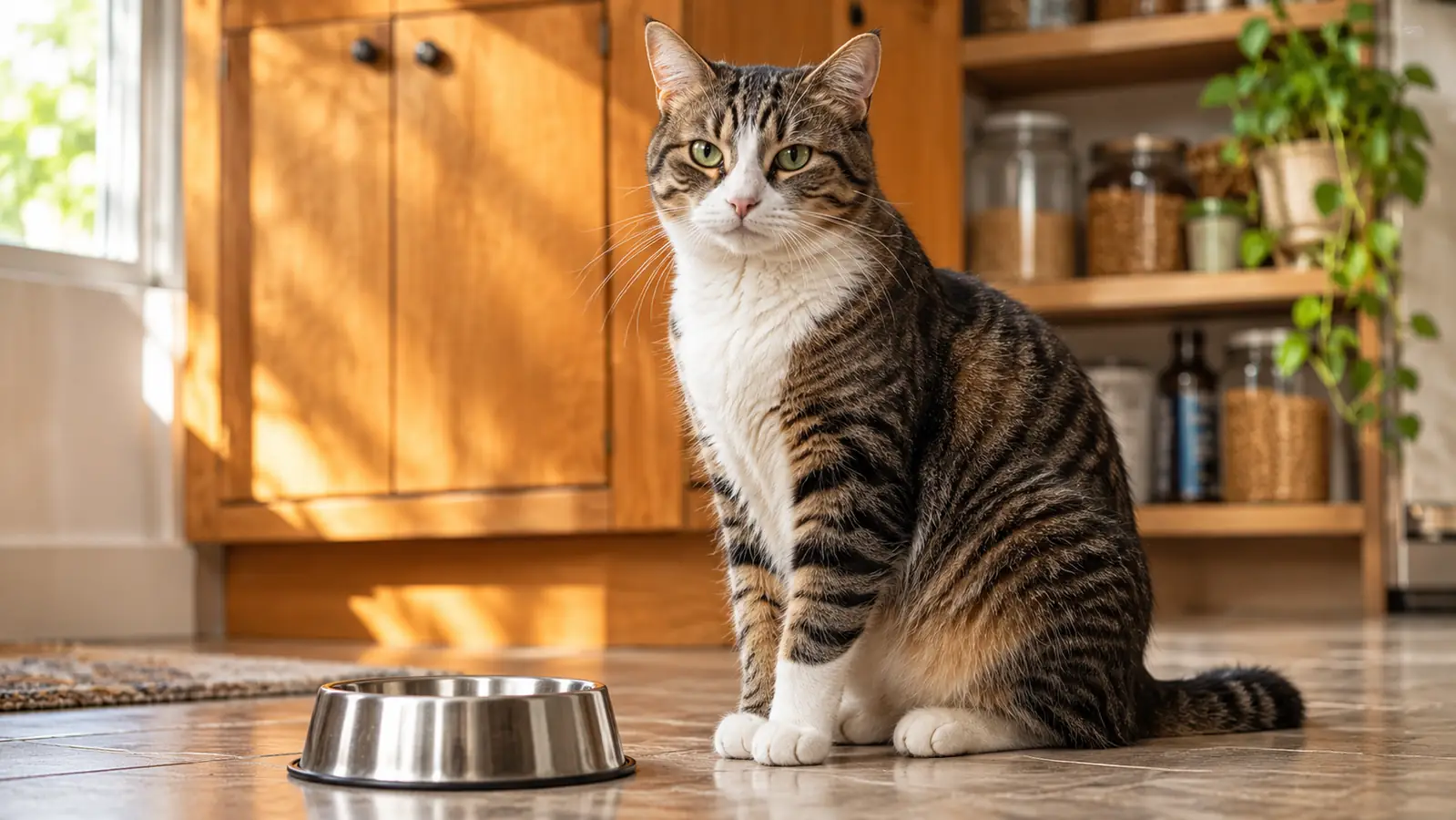
Juniper left a hairball on the good rug at 5:40 on a Tuesday morning, and I stood there in my robe with a roll of paper towels thinking, not again. She is 8 years old, a gray tabby domestic shorthair, 11 pounds soaking wet, and she has the kind of sensitive stomach that makes me read every label twice before I buy anything. I spent 24 years behind the front desk of a small-animal clinic here in Lexington, so I have heard every hairball question a person can ask. Hearing them and solving them are two different things. I still did not have a routine that stuck.
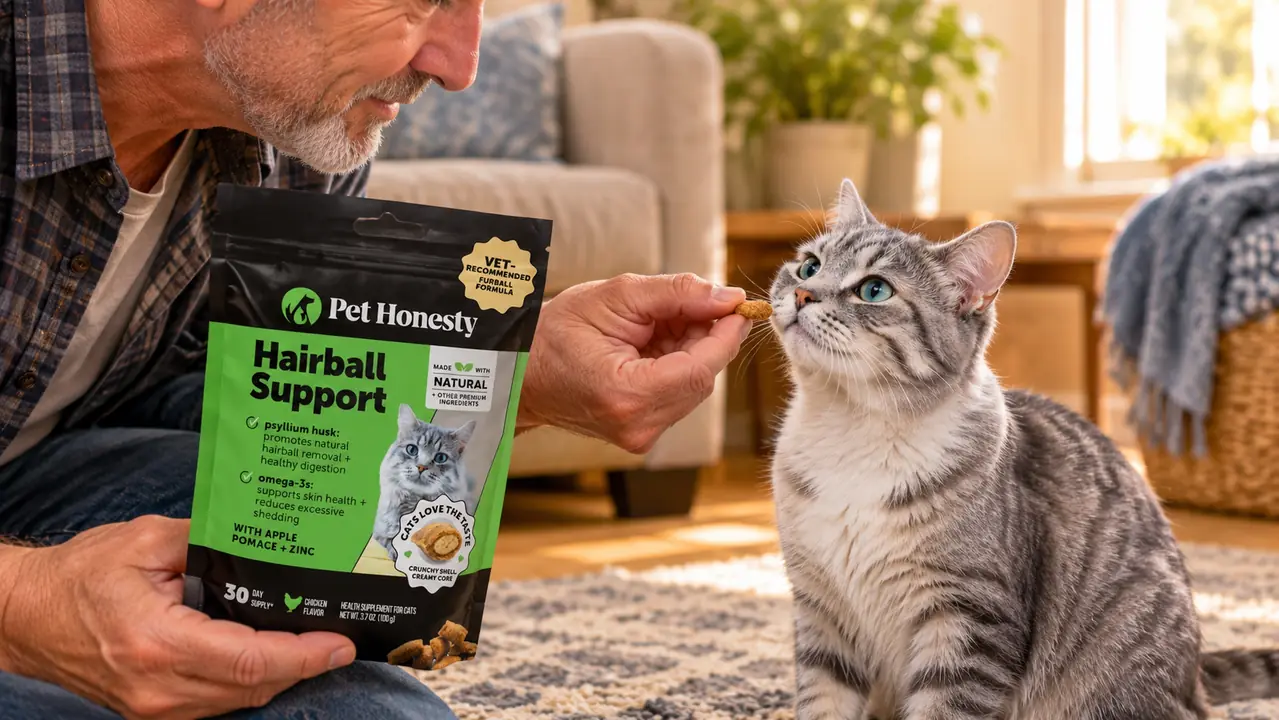
That is how a bag of Pet Honesty Cat Hairball Remedy Chews ended up on the pantry shelf next to Biscuit's joint chews. Pet Honesty makes a chicken flavored crunchy bite meant to be fed daily, not hauled out only when you spot a hairball on the carpet. The bag I bought is the 30-day supply, and the whole thing weighs 3.7 ounces. The label lists psyllium husk, citrus pulp, apple pomace, zinc methionine and omega-3s from fish oil and lecithin. Nothing you have to smear on a paw. I have now been through more than five weeks of daily use with Juniper. Here is what actually happened, including the parts that did not go the way I expected.
The Quick Verdict
A plain daily chicken chew that roughly halved Juniper's hairball frequency over five weeks, at the cost of a six-day standoff and a texture that rules out cats with sore teeth.
Amazon Check Today's Price →The hairball routine I stopped dreading every morning
A daily chicken flavored crunchy bite with psyllium husk, citrus pulp and omega-3s, sold as a 30-day supply for one cat. Read the feeding directions on the listing before you start.
Amazon Check Today's Price on Amazon →How I've Used It
The bag lives on the pantry shelf next to Biscuit's joint chews, which is a small thing that matters more than it sounds. A supplement you have to dig for is a supplement you forget. I feed Juniper twice a day, and the chew goes down with the morning meal. The bag carries feeding directions based on weight, and I followed those instead of eyeballing it, because 11 pounds is not a lot of cat and a supplement is not a treat. The bites are crunchy. I had expected something soft I could fold into her wet food, and soft is not what arrived.
Day one was a standoff. Juniper sniffed the bite, looked at me the way only a cat can look at a person, and walked off. I crumbled it over her wet food and she ate around it with great precision. On day two I set one down on the floor and left the room, which is the oldest trick there is and also the only one that works in this house. She ate it. By the end of the first week she was taking hers straight from my hand before I set the bowl down. The brand says nine out of ten cats liked the taste in their own feeding study. All I can tell you is that one gray tabby with a suspicious nature came around in about six days.
One warning that has nothing to do with the supplement and everything to do with living with a Labrador. Biscuit is 10, he is 78 pounds, and he eats anything that touches the floor. The chews now sit on a shelf he cannot reach, in a cabinet rather than on a low shelf. This is a cat formula for cats, and a big dog is not the animal it was dosed for.
What Is Actually Inside These Chews
I read the ingredient panel the way I used to read charts at the clinic, which is to say slowly and twice. The first three names are fiber: psyllium husk, citrus pulp and apple pomace. In plain terms, these are ingredients that add bulk and hold water in the gut, which is how a hairball formula helps swallowed fur keep moving down and out instead of backing up into the stomach where it gets coughed onto your rug at 5:40 in the morning. Fiber is not glamorous. It is also most of the job.
The omega-3s come from fish oil and lecithin, and zinc methionine is on the panel too, both aimed at skin and coat rather than at the hairball itself. That distinction is worth sitting with. A chew like this does two things at once: it helps move the fur that has already been swallowed, and it supports the coat so there is less loose fur to swallow in the first place. Pet Honesty also lists digestive health and immune support among the benefits, and that is the kind of claim a kitchen in Lexington cannot prove. I can tell you what I saw. I cannot tell you what a lab would find.
The rest of the label is short, and I like a short label. It is a chicken flavored crunchy bite, non-GMO per the packaging, and the bag measures 2 by 5 by 7 inches, so it takes up about as much room as a paperback on the shelf. Pet Honesty sells it as a 30-day supply, which for one 11 pound cat on the stated directions is roughly honest. Nothing here needs refrigeration, mixing or a spoon.
What Changed Over Five Weeks
Weeks one and two, I would love to tell you something dramatic happened. It did not. Juniper produced one hairball in the second week, which was about her old pace, and I stood in the kitchen wondering whether I had wasted a month and a shelf slot. This is the point where most people quit a fiber supplement. Fiber does not behave like a pill you take for a headache. It works on transit time, and transit time changes slowly.
Weeks three and four were different. The hairballs spaced out, and the ones that came up were smaller and looser, which is unpleasant to write about and genuinely a good sign. The bigger change was in her coat. Juniper is 8 and her coat had gone a little dull along her back, the way an older cat's coat does, and by the fourth week there was a shine to it I had not seen in a year. She was also grooming less frantically. Whether that is the omega-3s or just a cat being a cat, I cannot say.
By week five the pattern was clear enough that I wrote it on the calendar. Before the chews, we were at a hairball roughly every four days. Five weeks in, we were at one every nine or ten days, and the ones that happened were smaller. That is not zero. Anybody who promises you zero is selling something. But I stopped buying paper towels three rolls at a time, and that is a real change in a real house.
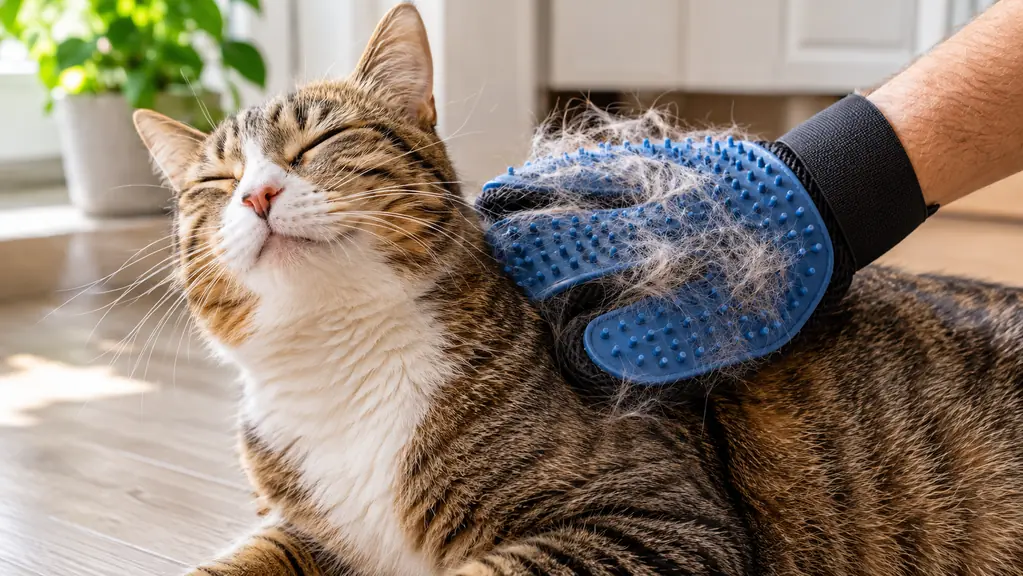
I also changed one other thing, and I want to be honest about it because it muddies the results. Somewhere in week two I started brushing Juniper every other evening with a rubber curry mitt, five minutes, out on the back step where the fur does not end up in the carpet. Brushing removes loose fur before it gets swallowed. Did the chews do all the work, or did the chews plus the brush do it? I cannot separate them, and I do not think you should try. Do both.
The Parts That Are Not Perfect
The first con is the texture. A crunchy bite is easy to hand over once a cat accepts it, but a cat with sore teeth, or a cat who only eats pate, will not be won over by crunch, and I have met plenty of both at that front desk. If your cat turns her nose up for a solid week, crumbling a bite into wet food is the fallback. If that fails, this is the wrong format for your animal and there is no shame in saying so.
The second con is that this is a maintenance habit, not a rescue. If your cat is already working on a hairball, a chew will not do anything about it tonight. That is what a lubricant gel is for. The chew is what you use so you need the gel less often, and it took me a few weeks to stop expecting it to behave like the gel.
The third thing is not a con so much as a boundary. A hairball every so often is ordinary cat business. A cat who vomits frequently, who brings up food rather than fur, who stops eating, who loses weight, or who strains in the litter box is not having a hairball problem, and no chew on a pantry shelf fixes that. Call your vet. I spent 24 years watching people wait three weeks too long because they did not want to be a bother. Be a bother.
What I Liked
- Cut Juniper's hairball frequency from roughly every four days to every nine or ten over five weeks
- Short, readable panel built on psyllium husk, citrus pulp and apple pomace
- Crunchy chicken bite most cats will take from the hand after a few days
- Omega-3s from fish oil and lecithin plus zinc methionine support the coat, so less fur gets swallowed
- No gels, no smearing, no refrigeration, and the bag stores flat
Where It Falls Short
- Crunchy texture rules out cats with sore teeth or cats who only eat wet food
- Does nothing for a hairball that has already formed, which is gel territory
- One cat finishes a 30-day supply in about 30 days, so it is a standing monthly habit
- Took a full two weeks before I could see any change at all
Before the chews, Juniper was at a hairball every four days. By week five she was at one every nine or ten, and smaller. Not zero. But I stopped buying paper towels three rolls at a time.
How It Compares To The Gel We Used Before
For years our answer to a hairball was a lubricant gel in a tube. It works, and I am not going to pretend it does not. You get a ribbon of it on a paw or on the nose, the cat licks it off, and a hairball that is already stuck gets moving. The problem is that it is a rescue, not a routine. Juniper hated the tube, I hated wrestling her, and neither of us was signing up to do that every day for the rest of her life.
A daily chew flips the job around. You are not waiting for the hairball. You are helping the fur move through before it becomes one. If your cat will take the chew, that is the better long term arrangement, and it is the one that has held up in this house. If your cat will not take it, keep the gel and use it when you need it. There is room for both, and the right one is whichever your cat will actually accept.
Who This Is For
This is for the owner of an indoor cat who brings up hairballs on a schedule, roughly once a week or more, and who wants a daily habit rather than a scramble on the bathroom tile. It suits a cat who will take a crunchy treat from the hand, or a cat who will eat one crumbled over wet food. It suits a house like mine, with one cat who has the problem, one dog who must be kept out of the bag, and a pantry shelf with room for one more container. It also suits someone willing to brush, because the chew handles what has already been swallowed, not what is still sitting on the cat.
Who Should Skip It
Skip it if your cat has sore teeth, missing teeth, or a mouth that has been trouble before. Skip it if your cat only eats pate and has never taken a hard treat in her life, because you will be fighting a losing battle and a gel is the kinder answer. Skip it if your cat is allergic to chicken or fish, since both appear on the panel. Skip it if your cat is on a prescription diet and your vet has told you not to add anything, because a supplement is an addition. And skip it, at least for now, if your cat is vomiting often, losing weight, or straining in the box. That is a vet visit, not a chew. Whatever you decide, run it past your own vet first. I am a retired receptionist, not a veterinarian, and I have been wrong about a cat before.
Five weeks, one bag, and a rug that finally stayed clean
Chicken flavored crunchy bites with psyllium husk, citrus pulp and omega-3s, sold as a 30-day supply for one cat. Read the feeding directions on the listing and check with your vet before you start.
Amazon Check Today's Price on Amazon →