
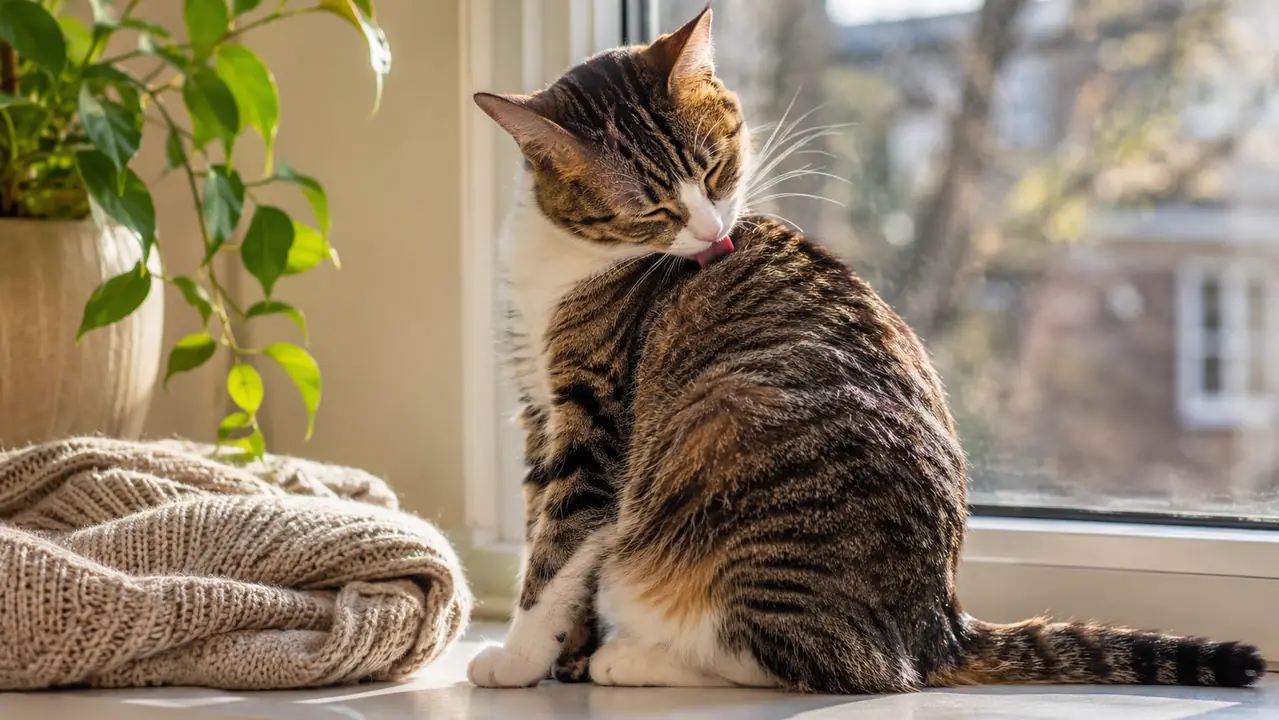
Juniper has left me two hairballs on the hall rug this month. Both times it was the same damp, cigar-shaped lump of gray fur, and both times I picked it up with a paper towel while she sat two feet away watching me do it. She is eight years old, eleven pounds, and she has the kind of touchy stomach that makes me read every label twice before anything goes into her bowl. If you are reading this, you probably have the same rug and the same problem, and you have already tried the tube of gel and the spoonful of pumpkin and the pat of butter your neighbor swears by.
Here is what actually worked in this house, with a Pet Honesty hairball chew as one piece of the routine and not the whole thing. I spent 24 years behind the front desk of a small-animal clinic in Lexington before I retired, so I have heard this question a few hundred times, and the honest answer is never a single product. It is four or five small habits stacked on top of each other, plus a phone call to your own vet, which I will keep repeating because it is the part people skip.
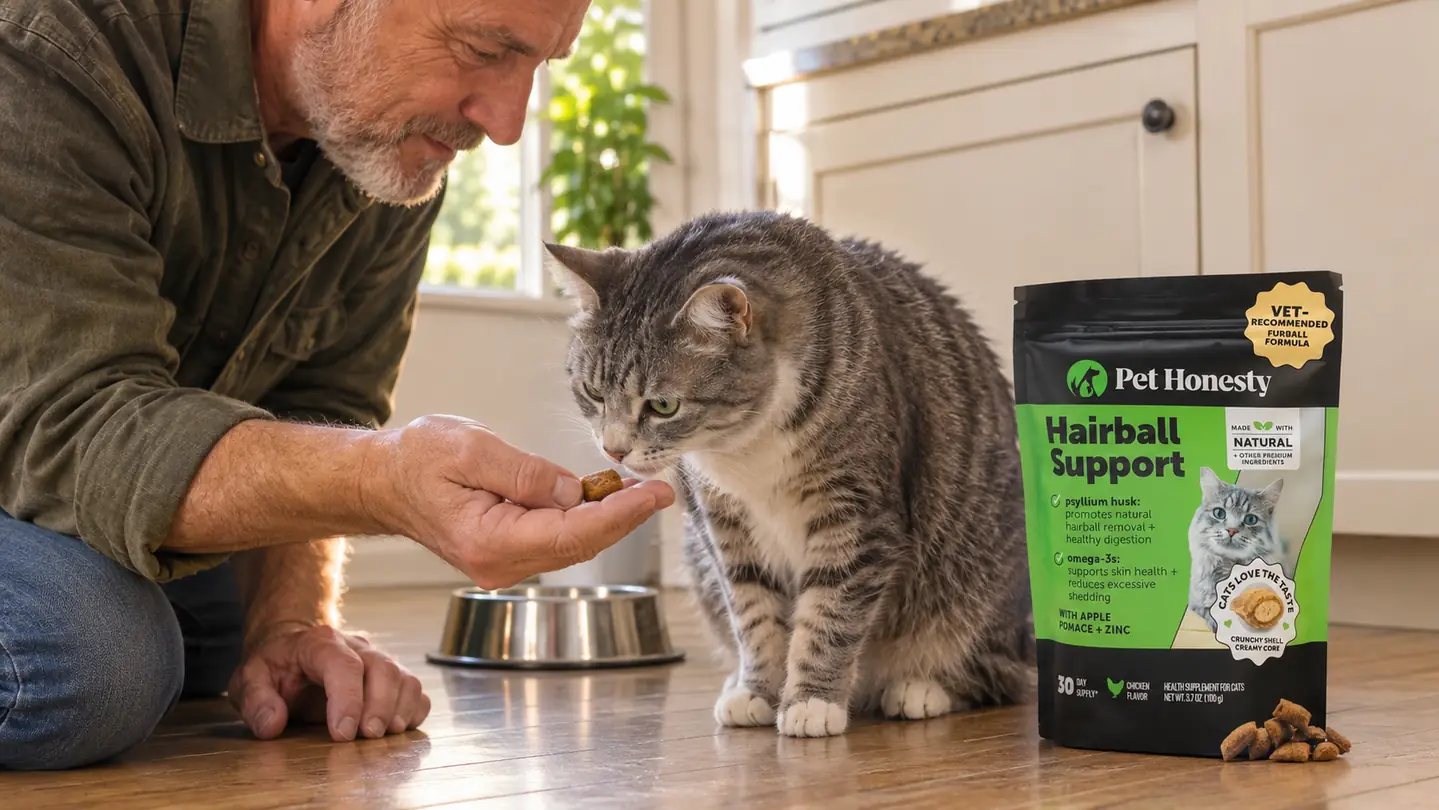
The chew part is simple enough. Pet Honesty Cat Hairball Remedy Chews are chicken-flavored crunchy bites sold as a 30-day supply, and the pouch measures 2 by 5 by 7 inches and weighs 3.7 ounces, so it fits on a pantry shelf without rearranging anything. The functional ingredients are psyllium husk, apple pomace, citrus pulp, zinc methionine, and omega-3s from fish oil and lecithin.
The brush does half the work. The chew handles the other half.
Chicken-flavored crunchy bites, a 30-day supply, and a fiber blend built around psyllium husk. See the current price and the full ingredient panel on Amazon.
Amazon Check Today's Price on Amazon →Step 1: Get the hairball question in front of your vet first
A hairball is not really a hair problem. It is a stomach problem wearing a fur coat. A cat swallows loose hair while grooming, the hair clumps in the stomach, and the cat brings it back up because it cannot move it through. That is ordinary enough in a cat that sheds. Frequency is what matters. Once every few weeks in a heavy-coated cat in spring is one thing. Twice a month in an eight-year-old shorthair is a reason to pick up the phone.
I am not a veterinarian and I am not going to pretend to be one, but I can tell you what the vet asked me at that desk a thousand times. How often. How long has it been going on. Is the cat eating. Is the cat using the litter box normally. Has the weight changed. Those five answers tell a vet whether this is grooming and shedding or whether it is something further down the pipe. Overgrooming from itchy skin or from pain can drive hairballs, and so can a motility problem that no chew on earth will fix.
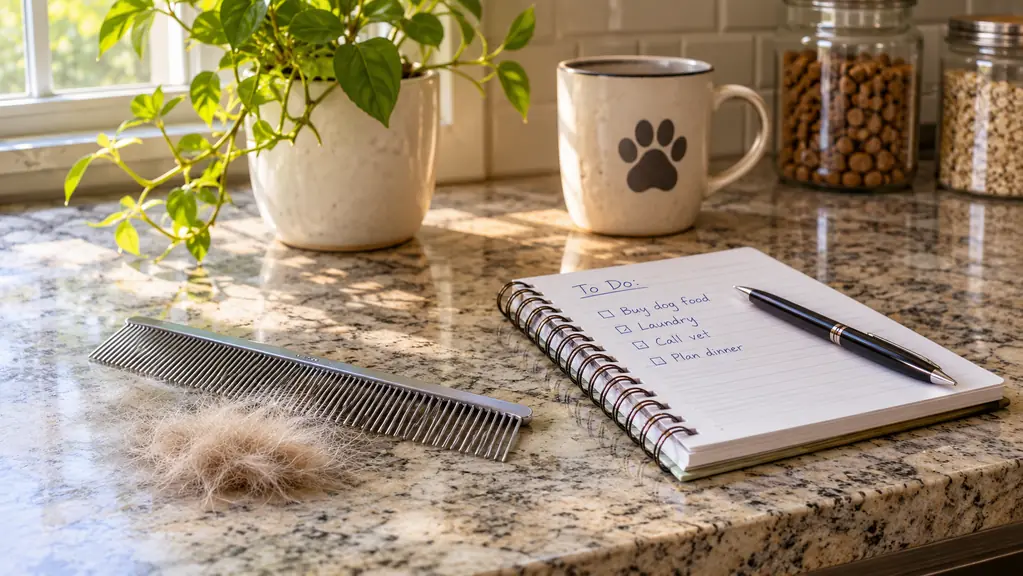
Write the answers down before you call. I keep a small notebook on the kitchen counter for Juniper and it takes ten seconds a day. When I called about her I could say she had two hairballs in the last three weeks, her appetite was normal, her stool was normal, and her weight was steady at eleven pounds. That is a far better conversation than she throws up hair sometimes.
Step 2: Brush the coat before the fur reaches the stomach
The cheapest hairball remedy is the one that never gets swallowed. Every strand you lift off the cat with a brush is a strand that does not end up in her stomach. Juniper is a shorthair, so I use a fine-toothed metal comb and a soft rubber brush, and I work in three-minute sessions because that is all she will tolerate before the tail starts going.
The first brush I bought was a slicker with fine wire pins, and Juniper hated it. She flattened her ears, slid off the couch after about four strokes, and spent the next hour under the bed, which is the opposite of what you want from a grooming routine. I switched to the metal comb and a rubber curry and the difference was immediate. What matters is not which tool you buy but whether the cat stays put long enough for the tool to do anything at all.
Short sessions more often beat one long session on Sunday. I brush her in the evening when she is already drowsy on the back of the couch, and I keep a damp paper towel nearby to wipe the comb so the fur does not go floating across the room. In spring and fall, when the coat turns over, I go to twice a day. That is the stretch when the rug gets hit, and it is no coincidence.
Pay attention to what the brush is telling you. If you are pulling off handfuls every day and the coat looks patchy or thin in spots, mention it to your vet, because that points at a skin problem or a thyroid problem rather than ordinary shedding.
Step 3: Introduce the chew slowly, and time it with a meal
Pet Honesty makes these as crunchy bites with a chicken flavor, and the company reports that nine out of ten cats liked the taste in an independent feeding study. Juniper is a careful cat who inspects anything new and then walks away from it, so I did not drop a chew into her bowl and hope for the best.
The first time I offered one, I did it at the same time as her evening meal, on the floor, by hand. She sniffed it, licked it, and left it. The second night she ate it. The third night she was waiting by the pantry door. If your cat turns up her nose, do not stir it into the food where it goes soft and changes the smell of the whole meal. Offer it separately as a treat and give it several days.
For the first four nights I set the chew on a small saucer beside her bowl rather than in it, so she could circle it and sniff it without committing to anything. By the fourth night it was gone before I finished filling the water bowl. If your cat is the type who eats first and sniffs later, the saucer is wasted on her, but a cautious cat will take it every time.
Go slower than the package directions if your cat has a sensitive stomach, which mine does. I watched her stool and her appetite through the first week, and I would have stopped and called the vet if either had changed. Two things worth raising with your vet before you start: this recipe contains chicken and fish oil, so a cat with a known food allergy needs a conversation first, and any cat already on medication should have the ingredient panel checked against it.
Nine out of ten cats ate it in the company's own feeding study. Juniper is the cat who inspects a new treat and walks away, so I offered one by hand and waited three nights.
Step 4: Put water and fiber in the bowl, not just a chew
Psyllium husk, apple pomace, and citrus pulp are fiber, and fiber only does its job when there is water to carry it. In a cat, that means hair moves through instead of parking in the stomach. A cat that eats dry food and drinks nothing is the cat that struggles here, and no supplement overcomes a dry bowl.
We put a water fountain in the kitchen, which Juniper ignores, and a plain ceramic bowl in the bathroom, which she drinks from constantly. Cats are strange. The point is to have water in more than one place, away from the food, and to change it daily. If your cat will eat wet food, a spoonful of wet food with a little extra water stirred in does more for hairball traffic than most people expect.
Water intake is easier to measure than you would think, and worth measuring once. I put a strip of tape on the inside of the bathroom bowl at the fill line and checked it every morning for a week. What I learned is that Juniper drinks almost nothing in the afternoon and most of hers overnight, which is why the second bowl went into the hallway where she already walks at two in the morning. That one change got more water into her than a fountain ever did.
Go easy in the fiber aisle, though. Stirring a spoonful of a human fiber product into a cat's dinner without your vet's input is how you end up with diarrhea and a cat that refuses to eat. The chew already carries fiber, and stacking more on top of it is not a plan.
Step 5: Track it for a full month before you judge it
The pouch is a 30-day supply, so give it a full 30 days before you decide anything. Hairballs are not a switch that flips. What you are watching for is a direction, not a disappearance.
Let me show you what an actual week looks like in my notebook. The last week of February read like this. Monday, no hairball, stool normal, ate every meal. Wednesday, one small hairball, looser than the ones before, still ate. Thursday, nothing. Saturday, she coughed twice on the windowsill and produced nothing, which is the entry that pushed me to call our vet instead of waiting it out. None of that is dramatic. It is just enough information to have a real conversation.
Four things go in that notebook. The date of any hairball. The quality of the stool. Whether she finished her meals. And anything unusual, especially coughing. Coughing matters, because owners confuse it with hairballs constantly. A cat that coughs and gags without bringing anything up is not having a hairball, and that cat needs a vet visit rather than another treat.
At the end of the month, look at the count. If you went from two a month to one, or the hairballs got smaller and looser, that is working and you keep going. If nothing changed, or things got worse, or your cat lost weight, stopped eating, or started hiding under the bed, stop and call your vet. A supplement is not a substitute for a diagnosis, and an eight-year-old cat is not a kitten.
What Else Helps
Stress is the piece nobody connects. Juniper grooms harder when people come to the house and when storms roll through, and a cat that grooms harder swallows more hair. Anything that lowers the temperature in the house helps. A quiet room she can retreat to, a covered bed, and a standing house rule that visitors do not chase the cat will do more than you would guess.
A warm, wrung-out washcloth does more than people think. Rubbed along the coat once a week, it lifts loose fur and pulls dander off, and most cats tolerate it better than a brush. Add steady flea control if fleas are in the picture, since itchy skin is a grooming trigger, and scoop the box more often than you think you need to, because a cat avoiding a dirty box is a stressed cat.
What I'd Skip
Butter, petroleum jelly, and a spoonful of olive oil all get passed around as hairball fixes. I would not use any of them without asking your vet first, and I would not use them long term. Greasy home remedies can cause loose stool in a cat, and a cat with diarrhea has a new problem on top of the old one.
I would also skip buying three hairball products at once. If you change the brush, the food, and the chew in the same week, you will never know which one did the work, and if the cat gets sick you will not know which one to blame. One change at a time, thirty days each. Patience is the boring part of this, and it is also the part that works.
Start the 30-day pouch and see what the rug looks like next month
Chicken-flavored crunchy bites with psyllium husk, apple pomace, citrus pulp, zinc methionine, and omega-3s. Check with your vet first, then give it a full month before you judge it.
Amazon Check Today's Price on Amazon →