
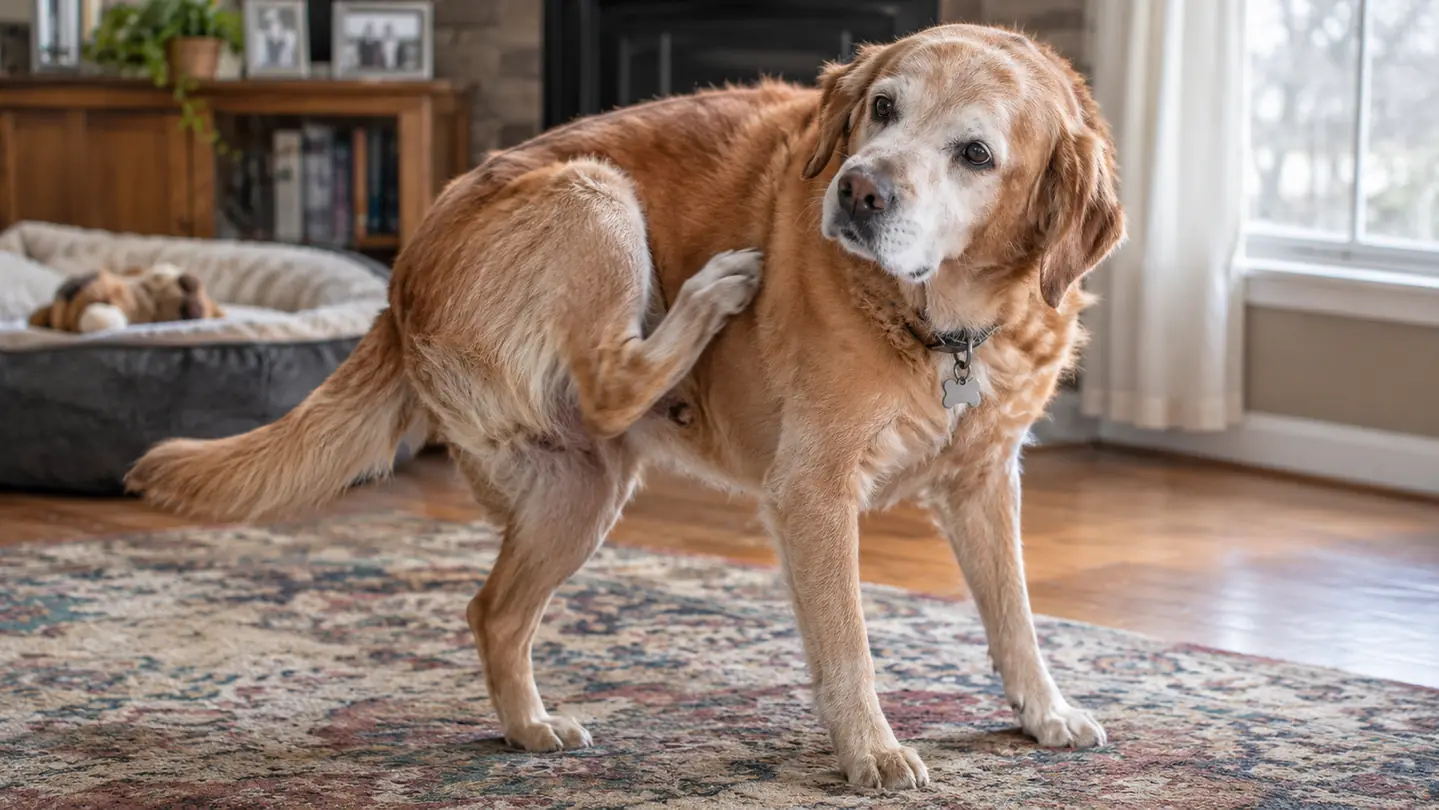
Biscuit starts scratching in November. Not all at once, and not dramatically. He scratches his flank while I am filling the kettle, then licks at his front paws on the rug, then shakes his head twice like something is buzzing near his ear. By January the skin along his belly is pink and thin and there is a bare patch the size of a half dollar near his tail. Our vet called it seasonal allergies with a yeast flare on top. I called it a long winter. If your dog does something like this, you have probably stood in the supplement aisle holding three bags of chews and reading the back of every one. That was me two winters ago. This is the routine we settled into with Zesty Paws Dog Allergy Chews, and the order of it matters more than the bag does.
The first thing I tried was fish oil. The second was an oatmeal shampoo from the grocery store. Neither was wrong exactly, and we still use both, but neither one touched the licking. What I did not understand then is that itching in a dog is rarely one thing. It is fleas plus dry January air plus a food he does not tolerate plus a skin barrier that has already broken down. A chew can help with part of that stack. It cannot help with all of it, and no honest label claims otherwise.
Start with the bag whose label you can read out loud to your vet
Colostrum at 250 mg and EpiCor fermentate at 80 mg per soft chew, lamb flavored, 90 to a bag. One to three chews a day depending on your dog's weight. Not fast, not a cure, but the one Biscuit stayed on.
Amazon Check Today's Price on Amazon →Here is the sequence that worked for us, in the order I would do it again if I had to start over.
Step 1: Get the Diagnosis Before You Buy Anything
A chew for seasonal allergies will do nothing for fleas and nothing for a skin infection, and from three feet away both of those look almost exactly like allergies. Our vet took a skin scraping and a piece of tape, looked at it under the microscope, and found yeast. That changed the plan. We left with a medicated shampoo and instructions to come back in two weeks.
So the first step is a vet visit, and it is worth the cost of the exam. Ask for three things specifically: a flea check, a skin cytology, and a real conversation about food. Fleas in Kentucky are a twelve month problem, not a summer problem. Food allergy is the one owners resist, because a proper trial means eight weeks on a single protein and nothing else, no table scraps, no biscuits, no chewable anything that is not part of the trial.
Our appointment was on a Thursday morning in the second week of December, and it took twenty five minutes from the scale in the lobby to the checkout desk. The scraping is not painful, just odd and cold, and Biscuit stood still for it because a technician held a jar at nose height and let him lick. I have watched a hundred dogs go through that same twenty five minutes, and the ones who fussed were always the ones whose owners were more nervous than they were. The exam was the cheapest thing we paid for all winter and it saved us from spending three months treating the wrong problem.
If your vet clears the fleas and the infection and calls it environmental allergies, that is when a supplement makes sense. It supports the immune system and the skin barrier. It does not replace the treatment plan. I answered this question at a front desk for twenty four years and the answer never changed: the chew works alongside the plan, not instead of it.
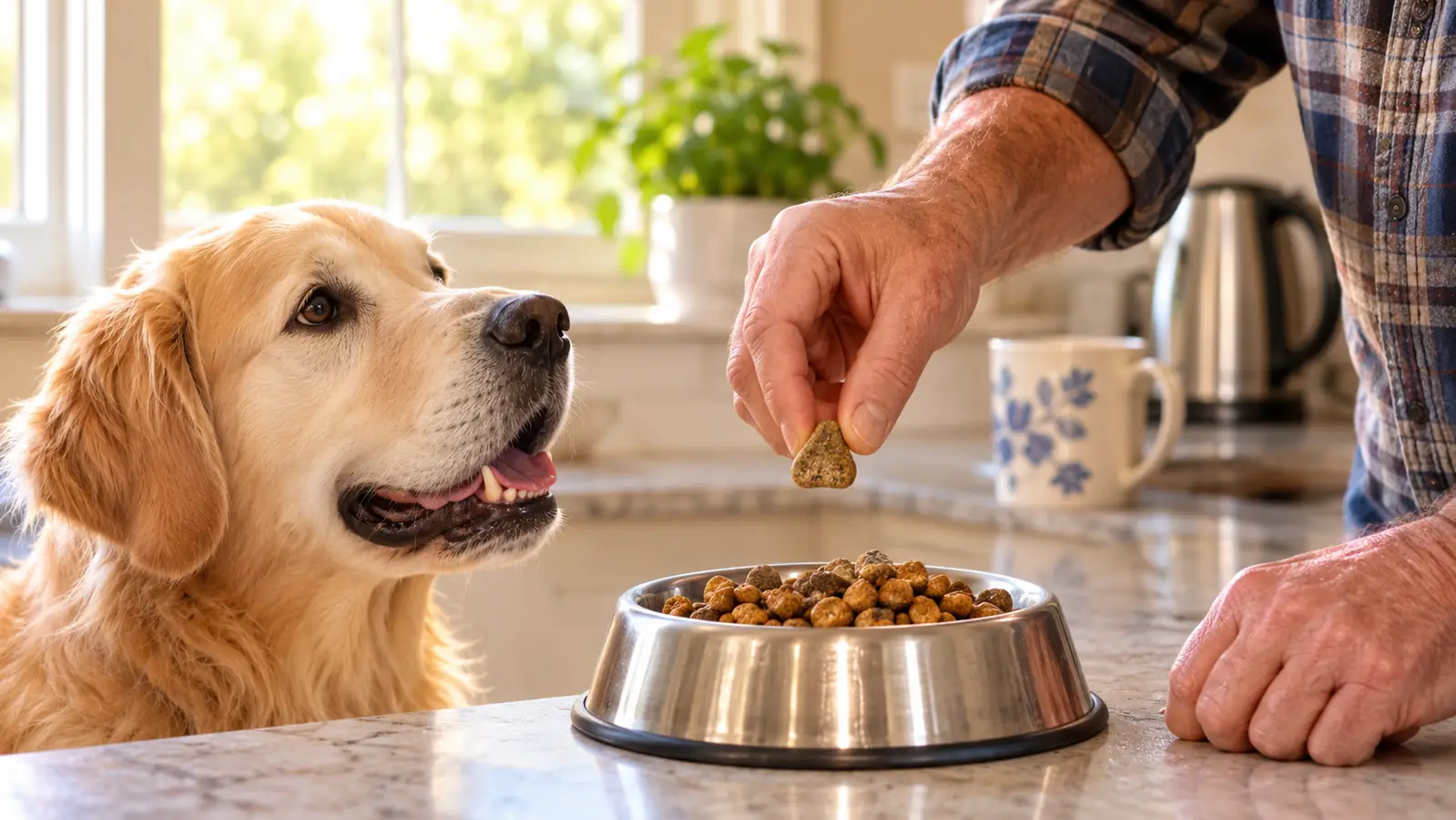
Step 2: Match the Dose to the Dog in Front of You
The bag gives one to three soft chews a day by weight, with a chart on the back. Biscuit is 78 pounds, which puts him at the top of that range at three chews, and I hold that next to the fact that the bag holds 90. Three a day means a bag lasts about a month. That is the number that matters when you are deciding whether to keep going, and it is the number nobody prints on the front.
Buddy is a yellow Labrador, and Labs gain weight the way a porch collects leaves. I weigh him on the same clinic scale every visit, because a dog who is 78 pounds in December can be 84 by March and that is enough to move him across a break on the chart. If your dog sits right at one of those breaks, ask your vet which side to use instead of splitting the difference yourself. Guessing at a dose is the one part of this routine you can get wrong entirely on your own, and it is the part nobody double checks.
Read the active line while you are at it, because this is where Zesty Paws separates itself from the bags that just say allergy support and stop. Each chew carries 250 mg of colostrum, 80 mg of EpiCor fermentate, and apple cider vinegar in the blend. EpiCor is the one I actually recognize, a yeast fermentate that turns up in immune products for people too. Whether it works for your dog is a separate question, but at least you can read the amounts to your vet and get a real answer.
Two practical notes. The chew is lamb flavored and soft, which matters for an older dog whose teeth are not what they were. And if your dog has a sensitive stomach, start with one chew for the first week rather than jumping straight to three. Any change in what goes into the bowl is worth easing into.
Step 3: Give It Every Single Day for Six Weeks
Skin runs on a slow clock. The cells turn over roughly every three weeks, and the barrier has to rebuild before anything on the outside looks different. Six weeks is the shortest honest trial. I have watched people give a chew for four days, see nothing, decide it failed, and buy something else. That is four days of nothing stacked on four days of nothing.
We keep the bag on the pantry shelf next to the coffee, which is the only reason I never missed a morning. Biscuit gets his three chews while the kettle heats, plain, no wrapping. A dog who turns his nose up can have them crumbled over food, as long as the food itself is not part of a diet trial.
If you reach six weeks and the licking is unchanged, stop and say so to your vet rather than buying a second bag out of stubbornness. A supplement is not a moral commitment.
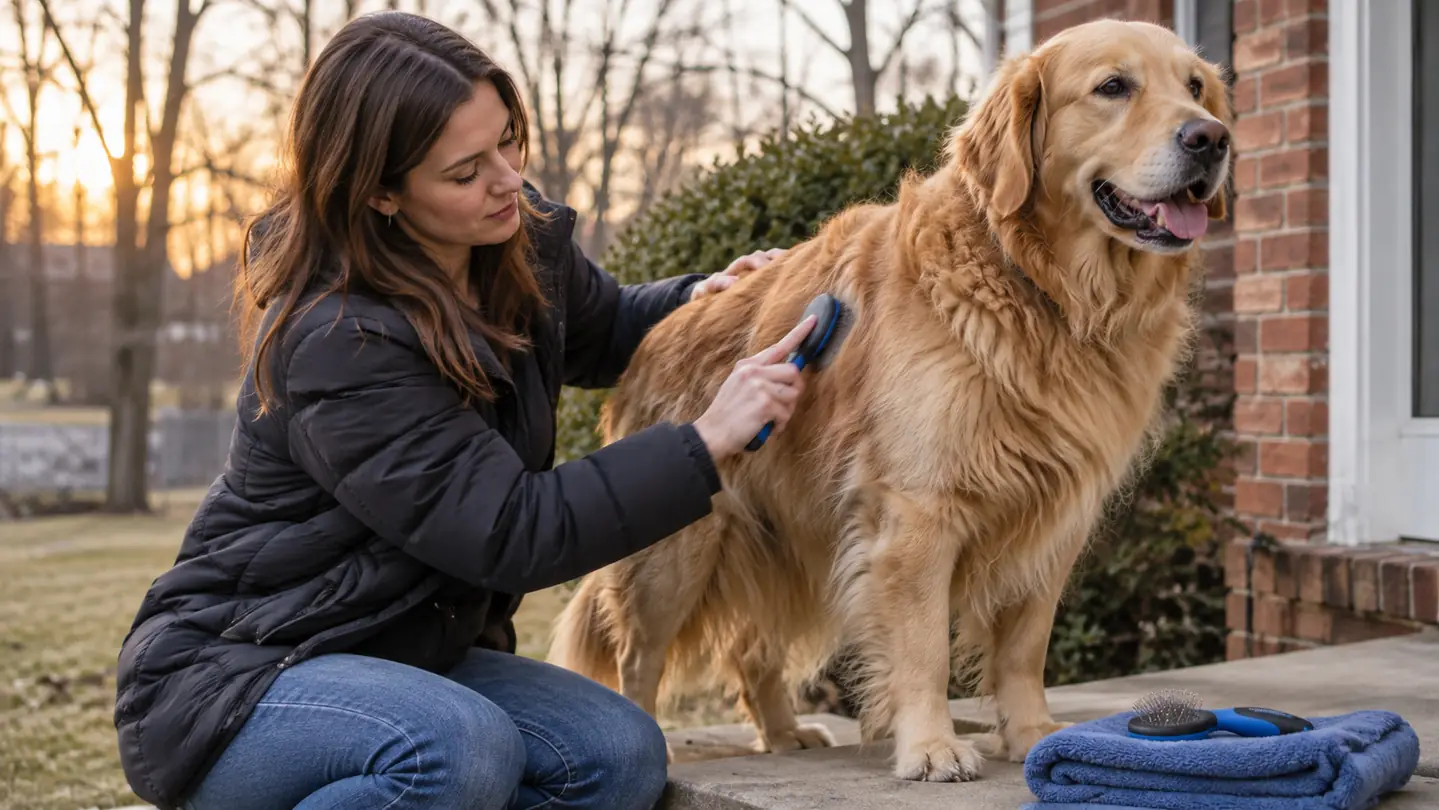
Step 4: Take Away the Other Itch Sources While You Wait
A chew doing half the work while the house does none of it looks exactly like a chew doing nothing. Four things made a visible difference for us and none of them cost much. First, flea control on a real twelve month schedule, not just the weeks when you see one. Second, a wipe of the paws and belly with a damp cloth after every walk in the grass, because that is where the pollen lands. Third, bedding washed weekly in something unscented, since detergent residue is a common irritant on a belly that is already pink.
Fourth, humidity. A one story brick house in January is dry enough to crack a hardwood floor, and it will do the same to a dog's skin. We put a humidifier in the room where Biscuit sleeps and his flaking dropped noticeably inside of two weeks. That is not a supplement claim. That is just air.
A small hygrometer from the hardware store told me the bedroom was sitting at 28 percent, which is dry enough to split my own knuckles. Four weeks of running the humidifier overnight brought it to 42, and the flaking along his spine went with it. The machine holds about a gallon and needs filling every second evening. Filling it is the whole cost of the habit, and I have done it in my robe at eleven at night more than once.
What I would not do is bathe more than every two weeks. It feels like you are helping. You are stripping what little barrier he has left.
Step 5: Keep a Record So You and Your Vet Can Tell Whether It Worked
Memory is a poor judge of itching, because you get used to it. I keep a note on the fridge with a date and a number from one to five, five being the January he scratched a bare patch into his flank. I also photograph the patch on the first of each month, same light, same angle. Two months in, the photos told me what the number did not, which is that the skin had stopped being angry even though the licking was still there.
Bring that record to the next appointment. A vet who can see a trend can decide whether to stay the course, add something, or move to a prescription. A vet who hears he seems a bit better has nothing to work with.
250 mg of colostrum and 80 mg of EpiCor fermentate per chew, printed on the label. That is the kind of detail you can read out loud to your vet and get a real answer instead of a shrug.
What Else Helps
A chew is one lever. Omega-3s from fish oil are another, and they work on the same skin barrier from a different direction, which is why plenty of owners run both. Our vet also has us on a medicated shampoo twice a month through the winter, and that is the single most effective thing we do for the yeasty smell that comes with a flare.
We use that shampoo in the utility sink, because it needs about ten minutes of contact time to do anything and ten minutes is a long time to hold a wet Labrador in place. I set a kitchen timer and stand there with my hand on his shoulder. It is the least glamorous part of the entire routine and the fastest thing to clear the smell. Ray holds the back door open afterward and Biscuit runs a lap of the yard before I can get a towel on him.
If the itching is severe, ask about the prescription options. There are injectable and oral medications now that act on the itch signal directly, and they work well for dogs who cannot get comfortable. They also cost more and need monitoring. None of that is a reason to skip a supplement, and a supplement is not a reason to skip them. The two sit at different points on the same ladder.
And be honest about the odds. Zesty Paws sells this bag at 4.2 stars across a very large number of reviews, which is a good score for a supplement and still means a real share of buyers saw nothing. Some dogs will not eat a lamb chew. Some will eat it happily and scratch on anyway. If yours is one of them, that is information, not failure.
Who This Is For and Who It Is Not
This suits the owner whose dog has been cleared by a vet for environmental allergies and who wants something daily, low risk, and easy to hand over. It suits the older dog with a dull coat and a pink belly every winter. It suits the person who wants to read the active ingredients and understand what the numbers mean before buying.
It does not suit a dog with an active skin infection, a dog in the middle of a food trial, or a dog so itchy he is not sleeping through the night. Those are vet problems first and supplement problems a distant second. Zesty Paws makes a chew. It does not make a diagnosis, and neither do I.
Six weeks, one bag, one note on the fridge
If your dog has been cleared for seasonal allergies and you want a daily chew you can read the label on, this is the one we stayed with. Three chews a day for a 78 pound dog, so a 90 count bag runs about a month.
Amazon Check Today's Price on Amazon →