
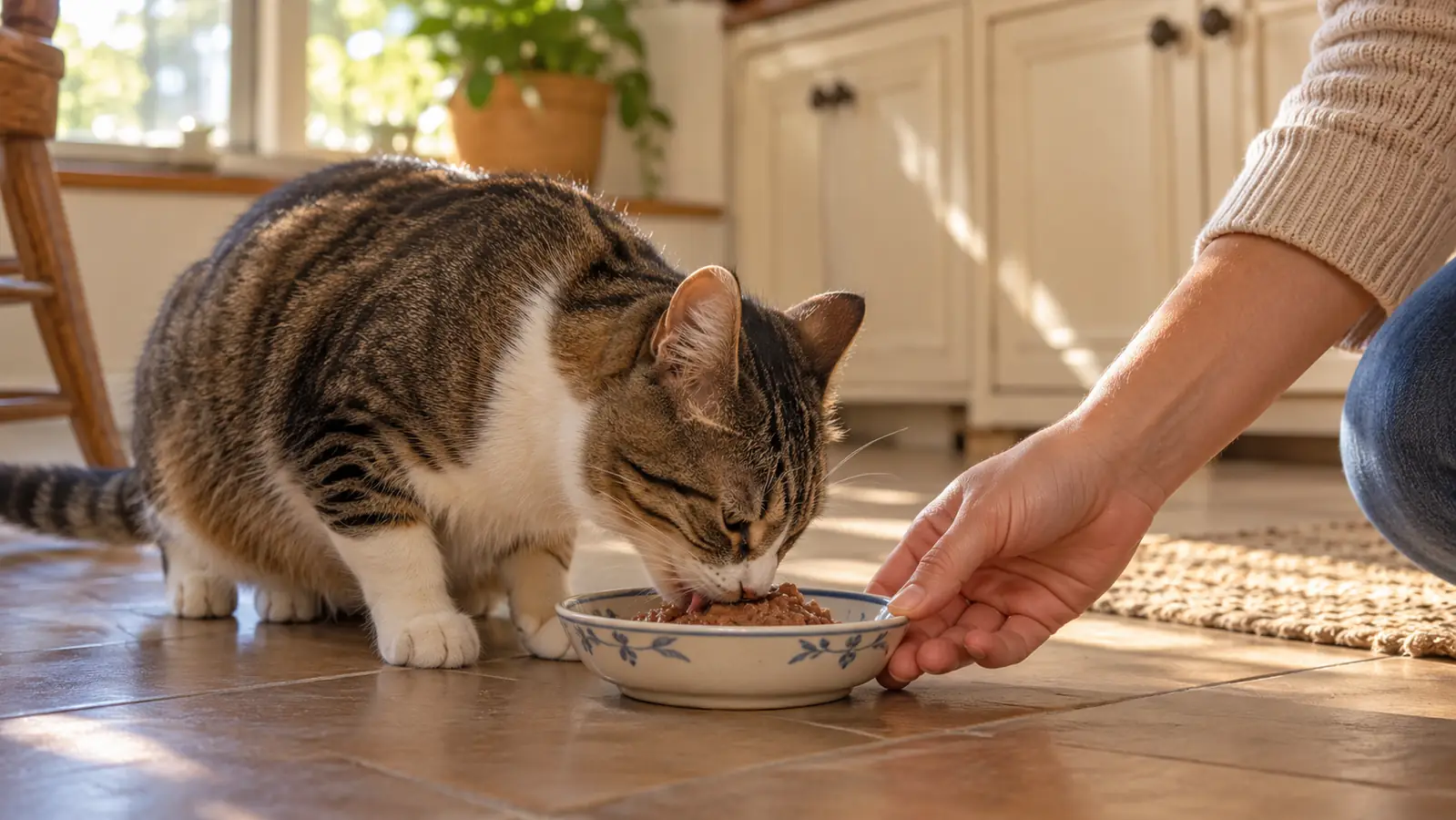
It is 4 a.m. and there is a sound coming from the kitchen that every cat owner recognizes. My gray tabby, Juniper, has a sensitive stomach. She has had one since she was about three years old. A hairball, a new food, an afternoon of visitors, and her digestion goes sideways for days. I spent 24 years behind the front desk of a small-animal clinic here in Lexington, and I heard the same question more times than I can count: what do I do about my cat's upset stomach? Most people have already tried the obvious things by the time they ask. Plain boiled chicken. A spoonful of pumpkin. Skipping a meal. Some of that helps and some of it does not. What I want to walk you through is the powdered probiotic that lives on a shelf in our pantry, Pro Plan Veterinary Diets FortiFlora, and how to use it so it actually has a chance to work.
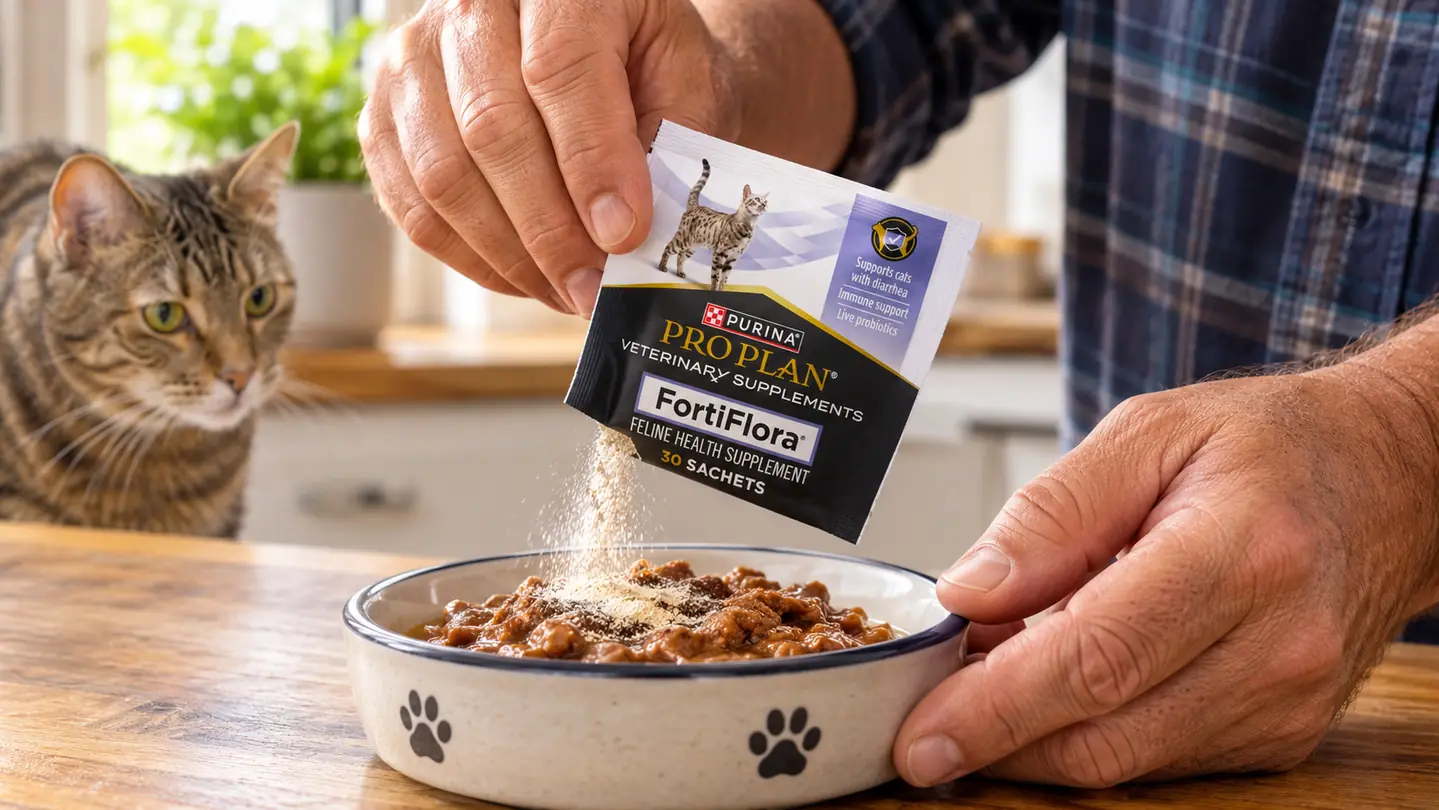
Pro Plan Veterinary Diets FortiFlora is not a medicine. It is a supplement, a powder that comes in small packets, and the reason it deserves a careful walk-through is that most people use it badly. They sprinkle one packet, see nothing change by the next morning, and quit. The box holds 30 packets. The listed active ingredient is a strain called Enterococcus Faecium SF68, with 5 mg of taurine. The flavor is unflavored, which matters more than it sounds, because a cat who refuses a supplement is a cat who is not getting one. Everything below assumes your own vet has looked at your cat first. I am not a veterinarian and I will not pretend to be one.
The thing I reach for first when Juniper's stomach turns
It is a powder, unflavored, and it goes on top of the food she already eats. No pilling, no wrestling on the bathroom floor at 4 a.m. A box holds 30 packets, which gives you a fair trial instead of a one-morning guess. Ask your vet whether it fits what is going on, then keep a box on the shelf for the next time.
Amazon Check Today's Price on Amazon →Step 1: Call Your Vet Before the First Packet
Cats are good at hiding illness, and diarrhea or vomiting is sometimes the first thing an owner can actually see. At the clinic, the vet I worked for would run through a short list before reaching for any supplement. Parasites. A sudden food change. Inflammatory bowel disease. Thyroid trouble in an older cat. In a young cat, something as simple as chewing a houseplant. A probiotic does not treat any of those. It supports the gut while the real cause gets handled. That distinction is the whole reason to make one phone call before you open the box.
When you call, be ready with three things. How long it has been going on, how many times a day, and whether the stool has changed in color or has mucus or blood in it. If your cat is a senior, mention that, because age changes the list of likely causes. Our vet asks for a stool sample more often than owners expect, and it is worth collecting one in a clean container before you go in, since a fresh sample saves a second trip and a second visit fee.
One more thing from the front desk. If your cat is overweight, do not fast her to settle her stomach without asking first. Cats are not dogs in this respect, and going without food for several days can cause a serious liver problem in a heavy cat. That was the warning our vets repeated most often, and it always came after an owner had already tried a day of no food.
Step 2: Look at What Changed in the Last Week
Before you blame the cat, blame the calendar. New food. A new treat. A switch from one protein to another. A bag that sat open too long. Company in the house, a moved litter box, a new detergent on the bedding. Cats are creatures of routine, and their digestion is one of the first places stress shows up. Keep a note on the refrigerator for a few days and write down what went in and what came out. It sounds fussy. It is the fastest way to find the answer without paying for it.
If you did change food recently, the usual advice is to go back to what was working and wait. If the upset started right after a switch, that alone may be the answer, and a supplement is support while you transition back rather than a solution by itself. When you reintroduce a new food later, do it slowly, mixing a small amount into the old food and increasing over a week or more. Most of the food-related upset I saw at that desk came from a switch made in one day.
Hairballs are the other common culprit in a cat like mine. Juniper brings one up every few weeks in shedding season, and the days around it are never her best. Regular brushing helps more than anything I can put in a bowl, and so does anything that gets more water into her, since moisture is what moves swallowed hair through instead of back up.
Step 3: Put the Powder on Food, Not in a Pill
The advantage of Pro Plan Veterinary Diets FortiFlora is the form. It is a powder, unflavored, and it goes on top of the food your cat already eats. You are not pilling a cat, which is a skill some people have and some people genuinely do not. Open the packet and sprinkle it over a portion of wet food, then put that portion down. If your cat grazes at a full bowl all day, give the sprinkled portion first, on its own, so you know it went in rather than settling to the bottom of the bowl.
A few practical notes from years of watching owners do this. Do not stir it into a big batch of food in the refrigerator, because you want it eaten fresh. Do not put it in the water bowl, since cats drink too little as it is and a cat who turns her nose up at the bowl will drink even less. Do not add it to hot food. And if your cat is on a prescription diet, ask your vet before adding anything at all, including a supplement that looks harmless on the label.
If the smell puts her off, which happens, try a smaller amount of food with the packet mixed in and offer the rest of her portion afterward. Warm, not hot, wet food is more appealing to a cat with a poor appetite. If she will not touch it after two or three tries on different foods, stop forcing it and ask your vet about a different approach. A supplement that ends up on the floor has done nothing for anybody.
Step 4: Give It Daily and Write Down What You See
The mistake I made the first time was judging it by one day. A supplement is not a painkiller. It works on the gut over weeks, not hours, and a box of Pro Plan Veterinary Diets FortiFlora holds 30 packets, so a box is a fair trial if your vet agrees with one packet a day for your cat. Follow the amount your vet gives you rather than the amount a neighbor used. Same product, different cat, different instructions, and a cat half the size of mine does not automatically need the same serving.
Keep a running note. Score the stool on a simple scale of your own, from firm to liquid, once a day. Write down whether she ate, whether she vomited, and whether she used the box normally. Owners who bring a week of notes into an appointment get far more out of the visit than owners who say it has been off and on. I say that as the person who used to take those notes over the phone and try to make sense of them for the vet.
Do not stack three new things at once. If you start the powder, a new food, and a hairball remedy in the same week and things improve, you have no idea which one did it. Change one thing, hold everything else steady, and give it time. That rule saved me from buying a second and third product I did not need.
Step 5: Know When to Put the Box Down and Call the Clinic
Support is not the same as treatment. If any of the following shows up, stop reading articles and call your vet the same day. Blood in the stool, or black tarry stool. Vomiting more than two or three times in a day. Refusing food for a full day. Hiding and refusing to move. A swollen or painful belly. Yellow color in the gums or the whites of the eyes. Weight loss over a few weeks counts too, even if your cat seems fine otherwise, because a cat can lose a pound and a half and still jump onto the windowsill.
Kittens and senior cats go downhill faster than a healthy adult, and a cat with a known condition such as kidney disease or diabetes should not be started on anything without a call first. There is also a point where the honest answer is that a supplement is not the tool for the job. If your vet has already found a cause, follow that plan first and treat the powder as an add-on, not a substitute.
What Else Helps
Water is the least glamorous answer and the one I would put first. Cats evolved to get most of their moisture from prey, and a cat eating only dry food is working from a narrow margin. Wet food helps. So does a water bowl that is not next to the food dish, since many cats prefer to drink away from where they eat. Some cats will drink from a running tap before they will touch a bowl, which tells you something about how fresh they want it to be.
Keep the box clean. A cat with a sensitive gut who avoids a dirty litter box will hold it, and holding it makes everything worse. Scoop daily and wash the box weekly with something unscented. Move it away from a noisy appliance if you have the room. Stress shows up in the gut, and the household changes that look small to us are not small to a cat who has opinions about the schedule.
And brush the cat. In a long-haired cat it matters more, but even a shorthair like Juniper takes in less hair with a few minutes of brushing a week. That reduces the hairballs, which reduces the vomiting, which reduces the wear on an already sensitive stomach. It is not a supplement, it costs nothing but time, and Ray is better at it than I am, so it falls to him.
A month of daily packets is a fair test. If the litter box has not changed by then, that is information for your vet, not a failure on your part.
How Long Before You Notice Anything
Owners want a number, and I understand why. The honest one is that a mild upset from a food change or a stressful week often settles on its own within a few days, and Pro Plan Veterinary Diets FortiFlora is there to support the gut while it does. A long-standing sensitive stomach is measured in weeks, not mornings. If you are three or four weeks in with no change in stool, appetite, or vomiting, stop and book the appointment. Continuing to buy boxes without a diagnosis is how people spend months and learn nothing.
The opposite mistake happens too. Someone sees improvement in four days, stops, and the problem returns a week later. If your vet wants a longer course, finish it. If you want to stop, stop when the box is done and watch for a few days, so you know what the baseline looks like without it. Then you have something to report instead of a hunch.

The Mistakes I Saw Most Often
The first was treating the powder as a fix for a food allergy. It is not one. A cat with an allergy or an intolerance needs the trigger removed, and no supplement covers for a food that does not suit her. The second was giving up after a single packet, or using it once a week and expecting anything to change. The third was never calling the vet at all, then arriving six weeks later with a cat who had quietly lost weight and a coat that had gone dull.
The fourth, and the one that still makes me wince, was the owner who mixed it into a bowl of dry food that sat out all day and then could not understand why the cat turned her nose up. Powder on wet food, eaten within the half hour, is the version that works in most houses. Keep it simple and keep it fresh. The cat will tell you the rest.
One box is a fair test, and a fair test beats a guess
Thirty packets, one cat, a few weeks of notes on the refrigerator door. If the litter box is calmer by the end of the box, you have your answer. If it is not, you have a much better question for your vet. Ask before you start, then keep a box on the pantry shelf for the next 4 a.m. morning.
Amazon Check Today's Price on Amazon →