
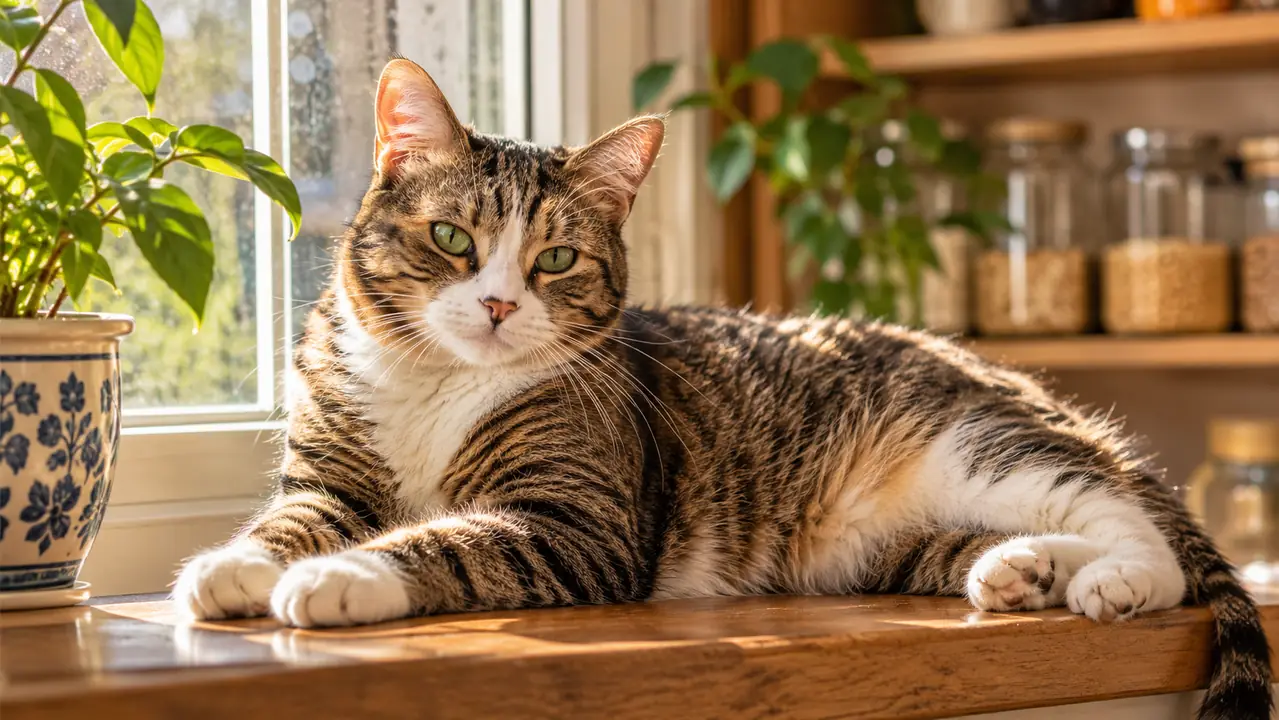
Juniper threw up on the hall runner three times in one week last April. She is an eight-year-old gray tabby, eleven pounds, and she has had a delicate stomach since the day we brought her home. I spent twenty-four years behind the front desk of a small-animal clinic here in Lexington, so I know the drill. I cleaned the carpet, wrote down what she ate and when she ate it, and called our vet. He examined her, found nothing serious, and suggested a probiotic before we tore up her diet and started over from scratch. That is how a box of Pro Plan Veterinary Diets FortiFlora ended up on the pantry shelf next to Biscuit's joint chews.
What I wanted back then was a straight answer about whether a powder could actually do anything for a cat with a touchy stomach, and I could not find one that was not written by somebody selling something. So this is the version I would have wanted six months ago. I am not a veterinarian. I answered phones and scheduled appointments for twenty-four years, which means I heard this question a few thousand times and I know how the answer usually goes. I will tell you what the label says, what I actually did, what changed for Juniper, what did not change at all, and who I think should keep their money in their pocket. Pro Plan Veterinary Diets makes some specific claims with this product, and after six months of daily use I can tell you which of them held up in this house.
The Quick Verdict
One strain, one serving a day, six months of use. Juniper's stools firmed up in about two weeks and her hairballs did not change at all, which is the most honest sentence in this review.
Amazon Check Today's Price →The first thing our vet reached for when Juniper's stomach would not settle
An unflavored powder in a 30-count box, mixed into food once a day. Six months in, it is still on our pantry shelf and still in her dish every morning.
Amazon Check Today's Price on Amazon →How I've Used It
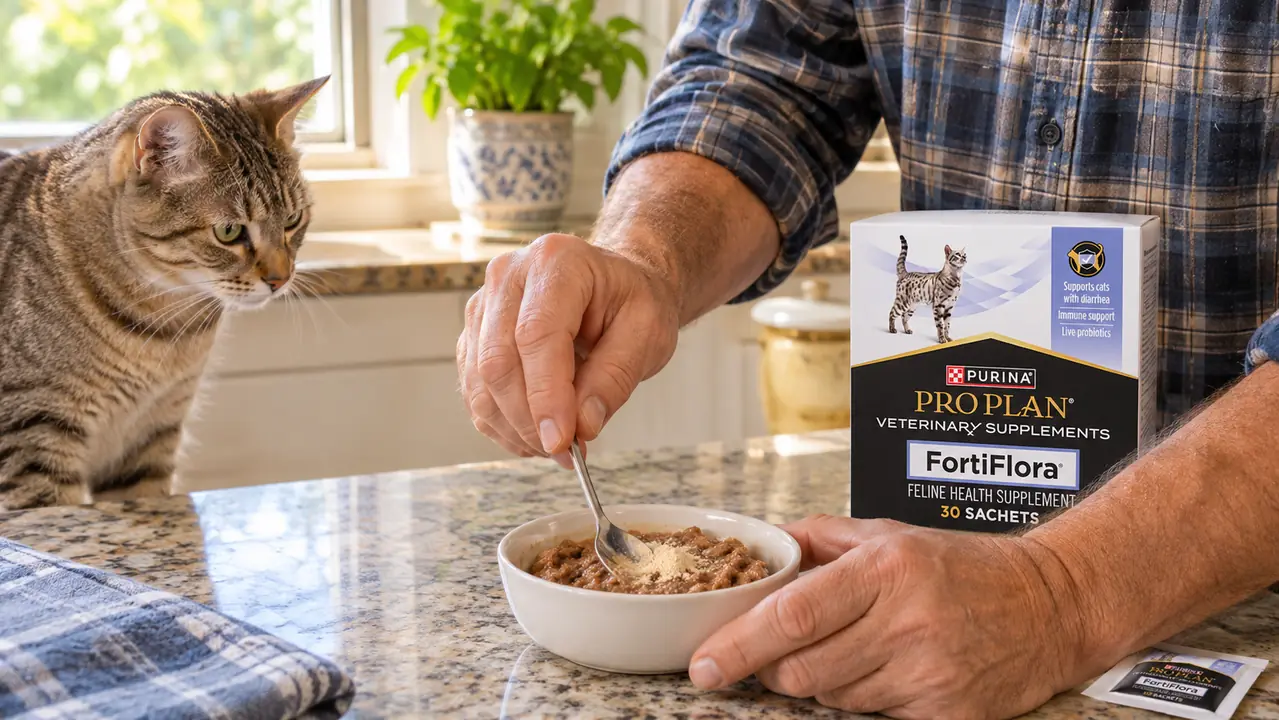
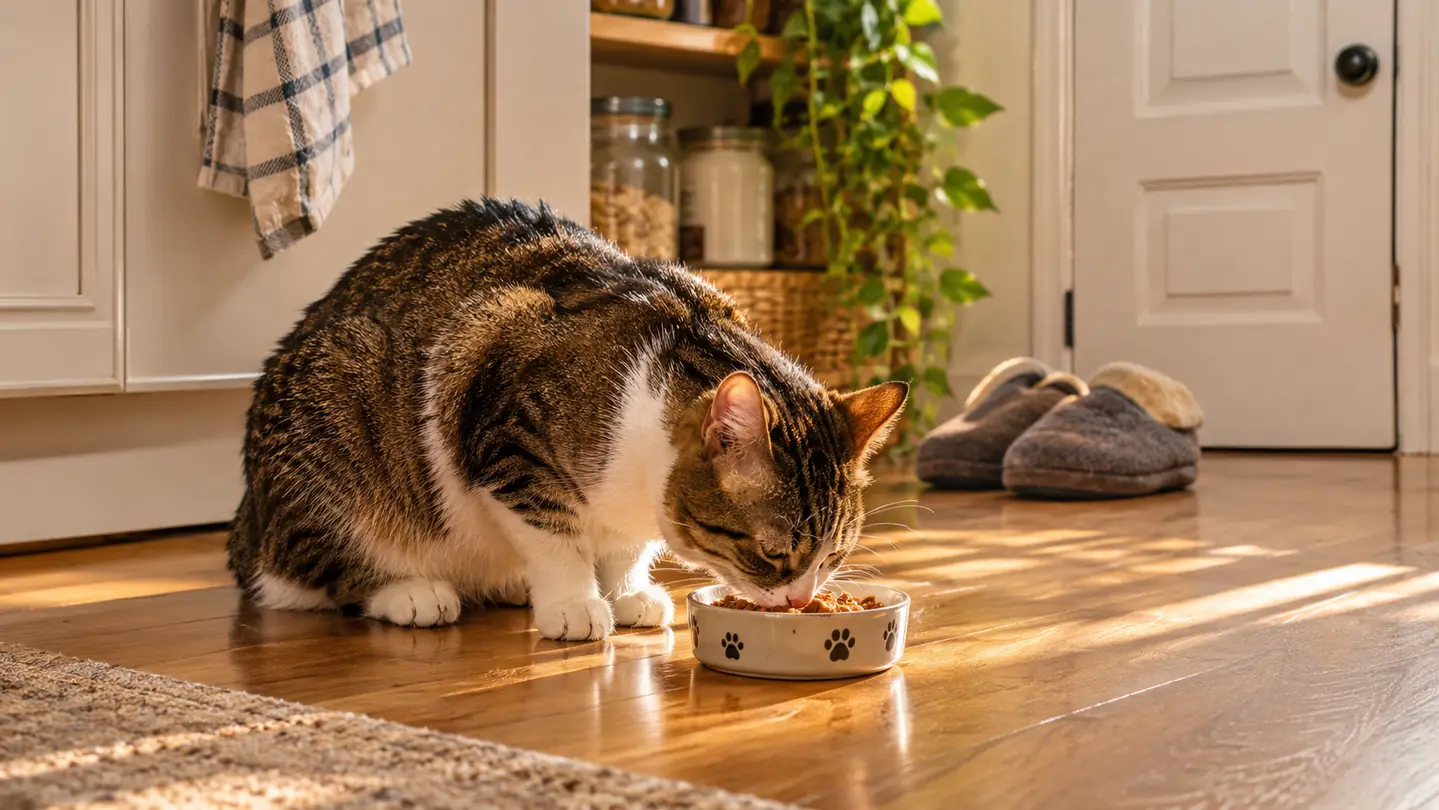
FortiFlora comes as an unflavored powder in a 30-count box. One serving a day, mixed into food. That is the entire routine, and I want to be clear about how small it is, because the phrase daily supplement sounds like a chore and this is not one. Juniper eats a split of wet and dry, so I mix it into the wet half in the morning, stir it once with a fork, and set the dish down on the same mat in the same corner as always. She has never once turned her nose up at it, which surprised me, because she is the kind of cat who notices a new dish towel from across the room and refuses to walk past it.
Our vet's instruction was to give it daily for at least two weeks before judging anything, and to keep everything else exactly the same. That last part matters more than people think. If you change food, add a new treat, and start a supplement in the same seven days, you have learned nothing and you will spend the next month guessing which one helped. I kept her food, her treats, her feeding times, and her water bowl where they were. The only new variable was the powder.
I also started a notebook. Nothing fancy, just a pen and a page in the kitchen drawer: what went in, what came up, and how the litter box looked the next morning. If you live with a cat with a sensitive stomach, that notebook is worth more than any review, including this one. Patterns show up in a written record that you will never catch from memory, and it gives your vet something useful to look at instead of your best guess.
One practical note. Biscuit, our ten-year-old yellow Lab, is seventy-eight pounds of bad ideas and would happily finish Juniper's leftovers, so I now stand in the kitchen while she eats and pick the dish up when she walks away. That is not a product problem. That is a Labrador problem. But if you have both a dog and a cat, plan for it, because a Labrador will absolutely eat a cat's probiotic and then look at you like you owe him more.
What Is in the Box and What It Is Supposed to Do
The label lists one active culture, Enterococcus faecium SF68, plus taurine at 5 mg. That is a single strain, not a blend. If you have been reading about probiotics and wondering why some products list five or ten strains, this one deliberately does not, and I know that is either the reason you are interested or the reason you are about to close this page. The powder is unflavored, the box holds 30 servings, and the whole box weighs 1.06 ounces, which tells you how small each daily serving really is.
The benefits on the label are digestive health, immune support, and antioxidant support. The listed uses include gastrointestinal support, diarrhea, and general digestive health. That is the manufacturer's language, not mine, and I am quoting it because you should read it as written and not as a promise. I sat at that front desk long enough to watch a great many owners walk in convinced that a probiotic would fix something it could not fix, and I do not want to add to that pile.
What a probiotic can reasonably do is support the bacteria already living in the gut. What it cannot do is cure a food allergy, clear a parasite, or fix a cat who is eating something she should not be eating. If your cat has had diarrhea for more than a couple of days, or has blood in the stool, or has stopped eating, put the box down and call your vet. I mean that sincerely. Pro Plan Veterinary Diets sells a supplement, not a diagnosis, and no powder on a shelf is a substitute for a exam and a stool sample.
The First Two Weeks
Nothing happened for four days. I want to say that plainly, because the internet version of this story usually skips it. Juniper's vomiting did not stop on day one or day three. Around day five, the litter box started looking more like a formed stool and less like a puddle, and the vomiting went from most days to maybe once a week. That is not a dramatic transformation. It is a slow one, and slow is what I would expect from anything that works on gut bacteria.
By the end of the second week the change was obvious enough that Ray noticed without being told, which is saying something in this house. She was also finishing her meals instead of walking away halfway through and coming back an hour later to ask for something better. That could be the probiotic, or it could simply be that a cat who feels less queasy eats more willingly. Either way, I will take it, and I stopped keeping the carpet cleaner on the counter.
The first box lasted a month, which lines up with the 30-count. That is the practical rhythm of this product and you should know it going in: this is a monthly decision, not a one-time purchase. If you are the type who forgets to reorder until the box is empty, put a reminder on your phone for day twenty-five.
Six Months In: What Changed and What Did Not
We are six months in as I write this. The vomiting is down to roughly once every two or three weeks, and when it happens it usually brings up a hairball, so I can see the cause. Her stools have stayed consistent through spring and summer, including the week in June when we had a house full of visitors and she was hiding under the bed for three days. She has gained back about half a pound, which our vet was pleased about. She is eight, so I watch her weight anyway.
What did not change: the hairballs. I had quietly hoped the probiotic would do something about those, and it did not. She still coughs one up every few weeks. What actually helped was brushing her more often in spring when she was shedding, and that cost me ten minutes a week and no money at all. If hairballs are your main complaint, this is not the product that solves it, and I would rather tell you that than have you buy a box on my word and be disappointed.
What also did not change: her nerves. Juniper hides when the doorbell rings and she is not a fan of thunderstorms, and six months of FortiFlora did nothing for either. I mention this because some probiotic marketing leans hard on the gut and mood idea, and I do not want anyone buying this expecting a calmer cat. If anxiety is your problem, that is a different conversation and probably a different conversation with your vet.
What did change, and this surprised me more than it should have: the box became ordinary. It stopped being a thing I was trying and became a thing I do, like brushing her and scooping the litter box. In my experience that is the surest sign that something is working well enough to keep, because nobody keeps doing a daily task for six months out of optimism.
Six months, one box a month, and the carpet cleaner has stayed under the sink since June.
The Tradeoffs Nobody Mentions
It is a single strain, and some people reasonably prefer a multi-strain product. I am not going to pretend I know which is better for your particular cat, because I do not. Our vet picked this one, it worked here, and I stopped shopping. If your vet recommends a blend instead, listen to your vet. They have examined your cat and I have not.
It only works if the cat actually eats it. If your cat will not touch wet food, or if you free-feed dry and cannot guarantee she gets her share of the dish, a powder is a hard sell. You cannot pill a cat with this and you cannot hide it in a bowl of kibble that sits out all day. This is a product for a cat who eats a measured meal you can watch her finish.
It is also not the cheapest way to buy a probiotic. Comparing it to a large tub of powder is not really fair, since the tub is a different product with different strains, but you should do the monthly math with today's price before you commit to a long stretch. Thirty servings is thirty days. That is easy to work out and easy to forget.
And it is a supplement, so the honest framing is that it supports digestion. It does not replace a veterinary workup. If your cat's problem turns out to be giardia, or a food allergy, or inflammatory bowel disease, no powder on any shelf will fix it, and you will have spent a month and a good deal of laundry learning that the slow way. I have watched people do exactly that. Call the clinic first.
What I Liked
- Settled Juniper's loose stools within about two weeks of daily use
- Unflavored powder stirs into wet food with no fuss, even for a picky cat
- Short ingredient list with one named strain, Enterococcus faecium SF68, and taurine at 5 mg
- 30-count box lines up neatly with a month of daily servings
- Our vet suggested it, and it is the kind of product a clinic reaches for first
Where It Falls Short
- Did nothing for hairballs across six months of use
- No effect at all on Juniper's storm and visitor anxiety
- Only works if your cat eats wet food you can mix it into
- Single strain, so it is not the pick for someone who wants a blend
- Monthly reorder, and the per-serving cost adds up over a year
Who This Is For
This is for the owner of a cat with a sensitive stomach who has already ruled out the scary stuff with a vet and now wants to support digestion while things settle down. It is for the cat who eats wet food from a dish you can watch, once or twice a day, and who is not fussy about a little grit in her dinner. It is for the person who wants one clear ingredient to look up rather than a label with nine strains and a marketing paragraph, and who is willing to give it two full weeks before deciding anything. Pro Plan Veterinary Diets keeps the routine simple, and for a cat, simple is the whole game.
It is also, frankly, for the person who has been up at two in the morning with a sponge and a flashlight, because that was me last April and I remember it clearly. If you are in that spot, this is a reasonable, low-risk thing to try once your vet has said the words let us try a probiotic. Just do the notebook, keep everything else the same, and give it time to work.
Who Should Skip It
Skip it if your cat has diarrhea that has lasted more than two days, if there is blood, if she is vomiting repeatedly, or if she has stopped eating. Those are not supplement problems and they need a vet, not a box from Amazon. Skip it if your cat eats only dry food you leave out, because you will never know how much she got. Skip it if hairballs are your main complaint, since it did nothing for Juniper's. Skip it if you are looking for something to calm a nervous cat, because it is not that either. And skip it if a vet has already told you the problem is a food allergy or a parasite, because the fix is in that plan and not in this powder. If you are on the fence, call your clinic and ask. That is what the front desk is for, and I promise they have heard the question before.
If your cat's stomach has been a guessing game since spring, start with one box
30 servings, one a day, mixed into wet food. Give it two weeks before you judge it, and keep a notebook so you know what actually changed.
Amazon Check Today's Price on Amazon →