
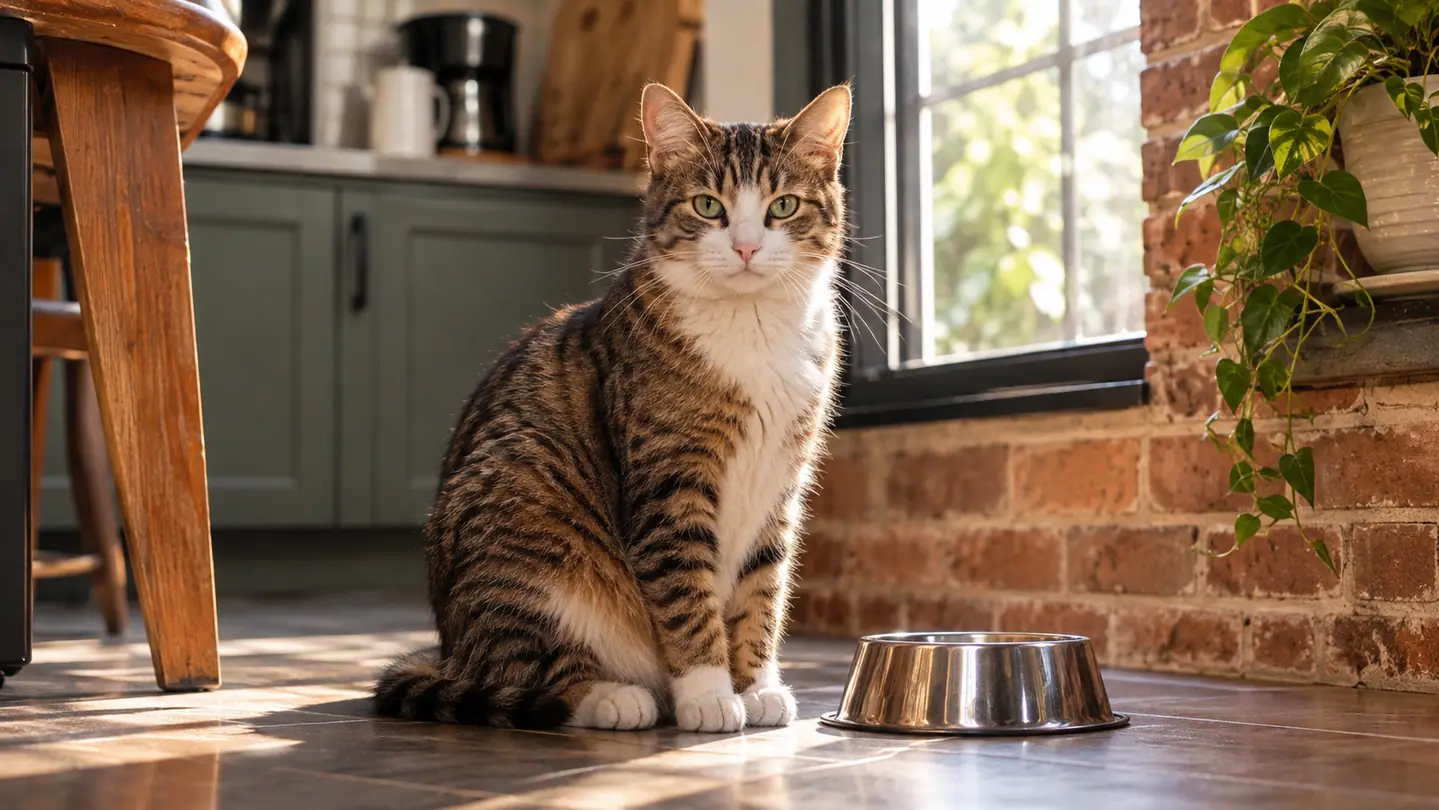
Juniper threw up on the kitchen rug at 4:40 in the morning and I cleaned it up in the dark by feel, because flipping on the overhead light would have woken Ray. That was the third time in nine days. She is an 8-year-old gray tabby, 11 pounds on our vet's scale, and she has had a touchy stomach her whole life. I spent 24 years behind the front desk of a small-animal clinic here in Lexington, so I know the script by heart. Change foods slowly. Rule out the obvious. Call the vet if it keeps happening. I did all of it. What finally made a difference was a powder called FortiFlora, made by Pro Plan Veterinary Diets, and I want to be careful and honest with you about what it did and did not do.
This is not a glowing review. It is the version I would give a friend in the waiting room, which is a different thing entirely. FortiFlora helped Juniper, I still buy it, and there are still five or six things about it that the cheerful reviews skip right over. If you are standing in your own kitchen at an ugly hour with a paper towel in your hand, you deserve the whole picture before you spend anything.
The Quick Verdict
A single-strain probiotic powder that genuinely steadied my sensitive cat. It will not touch hairballs, it will not rescue a bad food, and it only works while you keep giving it.
Amazon Check Today's Price →If your cat has the same touchy gut, this is the box I keep on the pantry shelf
Thirty servings, one a day, unflavored powder that stirs into wet food. Read the recent reviews from cat owners before you decide.
Amazon Check Today's Price on Amazon →What FortiFlora Actually Is, and What It Is Not
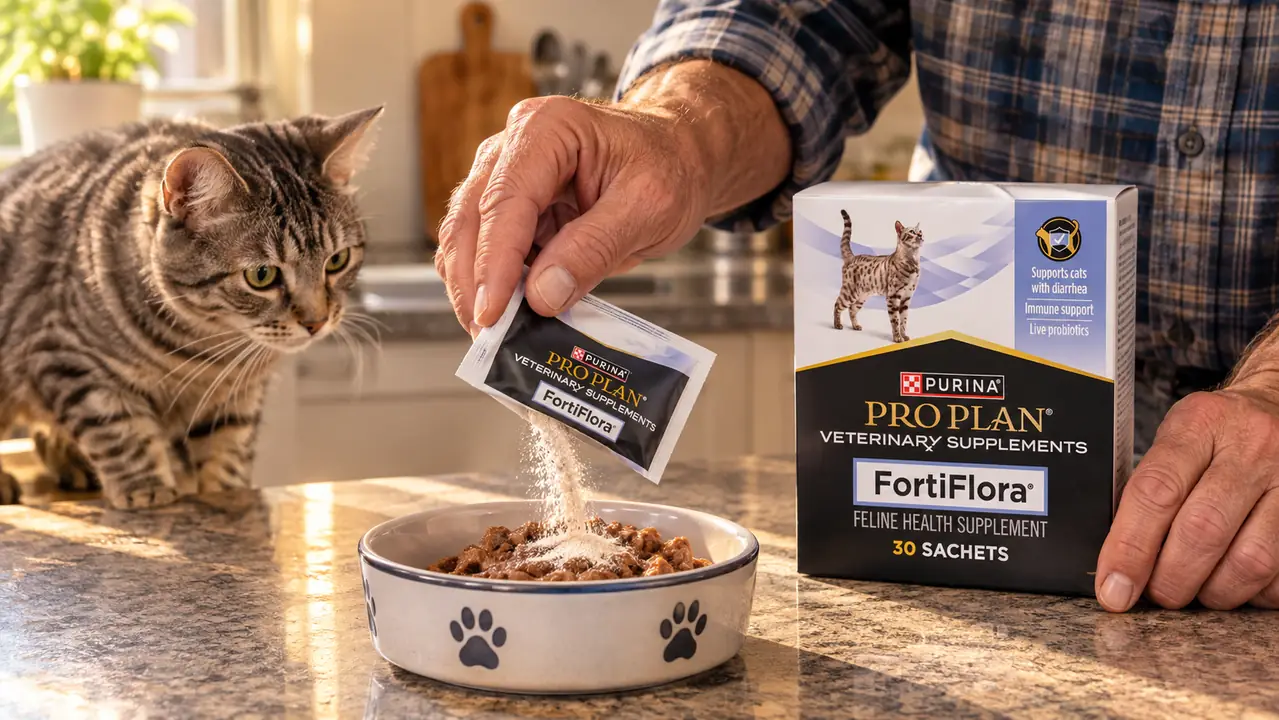
Strip away the box and it is simple. FortiFlora is a powder, unflavored, sold as a 30-count box that weighs 1.06 ounces in total. The active ingredient listed is a single bacterial strain, Enterococcus faecium SF68, along with taurine at 5 mg. The listed benefits are digestive health, immune support and antioxidant support. The listed uses run from general gastrointestinal support to diarrhea and probiotics, and the target species on the label is cat. That is the whole product. There is no second strain, no fiber blend, no pumpkin, no clay.
What it is not matters just as much. It is not a dewormer. It is not a treatment for a food allergy, and it will not tell you which ingredient your cat cannot handle. It is not a substitute for an exam when something has been dragging on for weeks. And it is not a cure for anything, which is the sentence I wish more reviews would print in the first line.
The single-strain part is worth understanding before you compare it to anything else. Plenty of probiotic products for pets throw eight or ten strains into a tub and let the label do the talking. Pro Plan Veterinary Diets went the other direction, with one strain that gets discussed on its own. Whether that is better for your cat is a question for your vet, not for me. What I can tell you is that a short, specific ingredient list is far easier to talk through with a veterinarian than a paragraph of Latin.
How I Actually Used It With Juniper
Our vet suggested it after we had already ruled out the obvious causes. She told me one serving a day, mixed into food, and to give it a fair trial instead of judging it on three mornings. So that is what I did. I used the same small spoon every morning and kept the box on the pantry shelf next to Biscuit's joint chews, where I would see it before I made my own coffee. One serving, once a day, stirred into a spoonful of wet food, so I could be sure Juniper got all of it instead of leaving half of it drying at the bottom of the bowl. For the first four days I wrote down what I saw on the back of an envelope: the time, what the stool looked like, whether she finished her dinner. Ray teased me about the envelope. By day five the notes were boring, which was the point.
The first week was unremarkable, and I want to be clear about that, because I do not want you ordering a box expecting a change by Thursday. Nothing got worse. That was the whole report. Sometime in the second week I noticed I had stopped bracing myself every time she walked into the kitchen. By the end of the first box, the messes had gone from three in nine days to none in about three weeks. Nothing dramatic. Just a quiet return to normal, which at my age is the version of good news I prefer. She also started meeting me at the bowl again instead of waiting for me to leave the room, and if you have ever owned a cat that went off its food, you know how loud that silence is.
The fussiness is real, by the way. Unflavored does not mean invisible. Juniper turned her nose up at it on dry kibble twice before I gave up and went with wet food only. I even tried half a serving mixed into a teaspoon of the gravy from her wet food, which worked, but it added a step I did not want to do twice a day. If your cat eats nothing but dry, ask your vet about your options before you buy, because a cat that licks the powder off and walks away from the food is a cat that got none of it.
By the second week I had stopped bracing myself every time she walked into the kitchen, and that is the whole review in one sentence.
The Parts Nobody Mentions in the Reviews
It did nothing for hairballs. Juniper still coughs them up in the spring, same as always, and I still keep the brush by the back door. In one bad week last spring she brought up four, and I kept a tally on the calendar by the phone until Ray told me the calendar was not the problem. Probiotics work in the gut. A hairball is a hair problem, and no powder in a box is going to fix the grooming side of it. If hairballs are your main complaint, this is not your product, and a review that implies otherwise is overselling.
It will not save you from a bad food. We went through two food changes in the year before this, and the second one is probably what did most of the heavy lifting. FortiFlora helped steady her while her gut adjusted to the new food. If your cat is reacting to something in the bowl, the powder is a cushion, not a fix, and you will be buying a box a month forever while the real problem sits there in the dish.
You have to keep going. I found this out by accident. I had exactly three packets left in the bottom of the box and kept telling myself I would reorder tomorrow. Eleven days passed. The loose stools came back around day eight, and I gave her those last three packets while I waited on the order, and the difference in those three days was plain enough that Ray noticed before I said anything. That told me what I needed to know. This is a daily habit, not a course you finish and forget. One box from Pro Plan Veterinary Diets is 30 servings, so one box is roughly one month in a one-cat house, and you should count on that as a standing order rather than a one-time purchase.
And it is not a treat. Your cat will not come running for it. Having no flavor of its own sounds like a selling point until you realize there is also nothing to hide behind. Mixed into something smelly, it vanishes completely. Sprinkled on plain food, it sits there and gets refused.
How It Compared to the Things We Tried First
Before this box, we tried three things, and I am telling you about them because the order matters. First came a pumpkin fiber supplement from the pet store, half a teaspoon twice a day for six days. It firmed her stool within two days, which felt like a win until the cramping started and she began hiding under the guest bed after meals. Second came a hairball paste, malt flavored, smeared on her paw twice a week for a month. She hated it, I hated it, and it solved nothing because hairballs were never the problem. Third came the food changes, five weeks of mixing one part new food into three parts old, then half and half, then three parts new. That took patience from both of us, and Ray did the measuring because I cannot be trusted with fractions before breakfast.
The food change is the one that mattered most. I want to say that plainly, because it would be easy to write a review where a powder is the hero and the boring work disappears. The boring work did most of it. What the powder did was get us through the transition weeks without the setbacks that made us quit the first time.
If you are choosing between a supplement and a proper conversation with your vet about diet, choose the conversation. If you have already had the conversation and you are just looking for something to steady a rocky stretch, that is exactly where a product like this earns its place. I have watched a lot of owners buy supplements to avoid the food change. It rarely works out, and the cat pays for it.
A Word About the Reviews You Are Reading
This listing carries more than 20,000 ratings and sits at 4.7 stars, so clearly it works for a great many cats. Read those reviews with one thing in mind: most people write theirs in the first week or two, when hope is high and nothing has been tested yet. I sorted the three-star reviews by newest one evening and read about forty of them. Almost nobody comes back eight months later to say it still works. That is not dishonesty. It is just how people are.
The negative reviews generally split into two piles. Either the cat would not eat it, which is a real problem and worth taking seriously, or it did not help, which usually means the cause was never a gut bacteria issue in the first place. I have read enough of them to say that both piles are fair. What you will not find in either pile is somebody whose cat was cured of something serious, because that is not what this is.
What It Fixed and What It Did Not
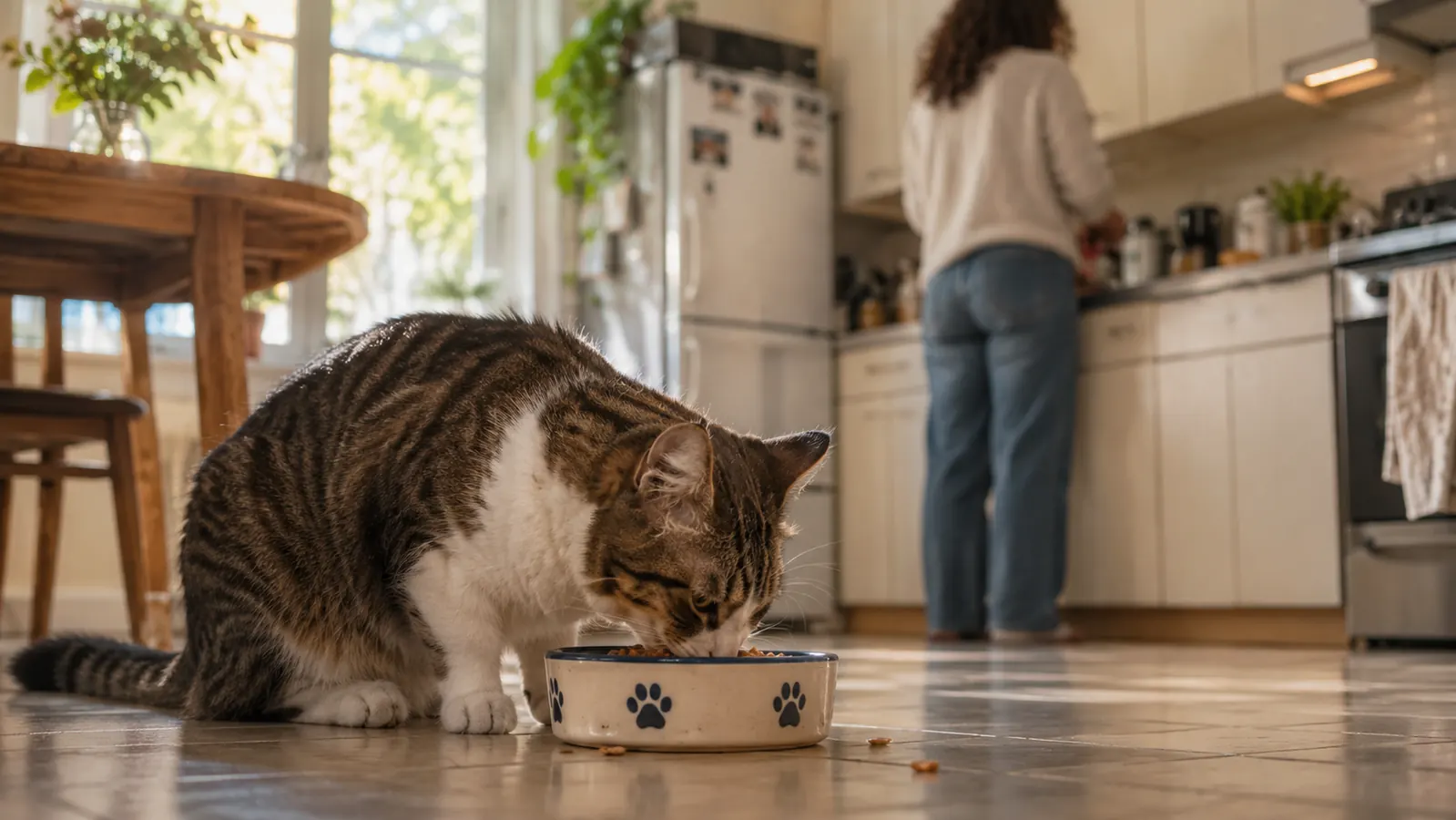
Fixed, or close enough: the loose stools and the 4 a.m. surprises. Her appetite came back to where it used to be, and she stopped leaving half her dinner in the bowl. At her last check our vet was happy with her weight, and with an 8-year-old cat the number on the scale is the number I actually care about.
Not fixed: the hairballs, and the nerves she gets when the doorbell rings. Those are separate problems with separate answers, and I would rather tell you that than pretend one powder handles the whole cat. When a supplement is marketed as fixing three unrelated things at once, that is usually a sign it does none of them properly.
What I Liked
- One named strain, Enterococcus faecium SF68, which is easy to discuss with your own vet
- Unflavored powder that stirs into wet food without a fight
- Made by Pro Plan Veterinary Diets, a line most clinics already stock
- 30 servings per box, so the daily math is simple
- Listed for digestive health, immune support and antioxidant support
- Helped a sensitive 8-year-old cat get through a food transition
Where It Falls Short
- Does nothing for hairballs, and should not be sold as if it does
- Needs wet food or a workaround, since dry-only cats often refuse it
- The benefit stops when you stop giving it, so it is a monthly habit
- No flavor of its own means there is nothing to mask it with
- One box lasts about a month, so budget for a standing order
What I Would Ask Your Vet Before You Start
Four questions, in this order. First, do these symptoms sound like a gut issue or something else, because vomiting and loose stool can come from a long list of causes and a probiotic is not a diagnostic tool. Second, should we run a fecal test before adding anything. Third, should a food trial come first. Fourth, how long should I give this before we decide it is not working.
That fourth question matters more than people think. Without a date on the calendar, owners either quit after four days or keep buying boxes for a year out of stubbornness. Ask your vet to name a number of weeks. Write it on the box in pencil. Then follow it honestly, for the cat's sake and your wallet's.
Who This Is For
This is for the owner of a cat with a sensitive stomach who has already had the basic conversation with a vet. It suits cats whose loose stools showed up around a food change, a course of antibiotics, or a stressful stretch like a move or a new person in the house. It suits a cat that eats wet food and will tolerate a powder stirred into it. Pro Plan Veterinary Diets sells it as a daily supplement, not a rescue remedy, and that framing is the honest one.
It also suits the owner who wants something simple and named rather than a tub of ten strains with a cheerful label. If you can commit to one serving a day for a month and then judge it honestly, this is a reasonable thing to try. If you want a product you can give occasionally when things get bad, this one is built for daily use and will disappoint you that way.
Who Should Skip It
Skip it if hairballs are your main complaint, because this will not touch them. Skip it if your cat eats dry food only and you have no plan for getting powder into her. Skip it if the vomiting has not been checked by a vet yet, because you would be guessing at a problem that deserves a proper look. Skip it if you are hoping for a one-time fix, since the benefit stops when the box does.
And skip it if you live with several cats and cannot tell who is producing what. In a house like that, you need to know which cat has the problem before you start supplementing anybody, or you will spend a month fixing a cat that was never sick. I have seen that happen more times than I can count, and it always starts with good intentions.
Thirty servings, one a day, about a month to find out if it works for your cat
This is where I would start with a touchy stomach, and where I would stop before trying anything more complicated. Ask your vet first, then read the current reviews and today's price.
Amazon Check Today's Price on Amazon →