

I spent 24 years behind the front desk of a small-animal clinic in Lexington, Kentucky, and I heard the same question in about nine hundred different forms: is this supplement worth my money? Of all the joint products owners carried in, Cosequin, made by Nutramax Laboratories, is the one that came up most often, usually with the bottle already opened and the receipt still folded in the bag. So this is not a review written from a testing lab. It is what I watched happen in exam rooms for two and a half decades, and what has happened in my own kitchen with Biscuit, my 10-year-old yellow Labrador, who weighs 78 pounds and is stiff in the hips on cold mornings.
Here is the short version, because you may be reading this in a store aisle. Cosequin is a reasonable, well-made joint support tablet for a dog with mild to moderate stiffness. It is not a painkiller. It is not fast. It will not fix a torn ligament, and it will not rescue a hip that needs surgery. That last part was never popular at the counter and I said it anyway, because the owners who most needed to hear it were the ones most likely to spend three months waiting on a bottle instead of booking the X-ray.
The Quick Verdict
A solid glucosamine, chondroitin and MSM tablet from a company that has been making them for a long time. It nudges mild stiffness in the right direction and does nothing for a dog who needs a diagnosis.
Amazon Check Today's Price →The bottle I would buy again, for a boring reason
Three actives named on the label instead of hidden in a blend, a manufacturer with more than 25 years behind it, and a tablet my dog will actually eat. That is the entire case, and it is enough.
Amazon Check Today's Price on Amazon →What Cosequin Actually Does
The label lists three active ingredients and does not bury them inside a proprietary blend, which I appreciate more now than I did at the desk. They are glucosamine hydrochloride, printed with the company code FCHG49; sodium chondroitin sulfate, printed as TRH122; and MSM, short for methylsulfonylmethane. In the simplest terms, the first two are materials cartilage is built from, and MSM is a sulfur compound that turns up in most joint formulas of this type. That is the reasoning behind the formula and it is sound reasoning. What I will not do is tell you it rebuilds a worn joint. Supplements support. They do not repair, and the word on the label is support for a reason.
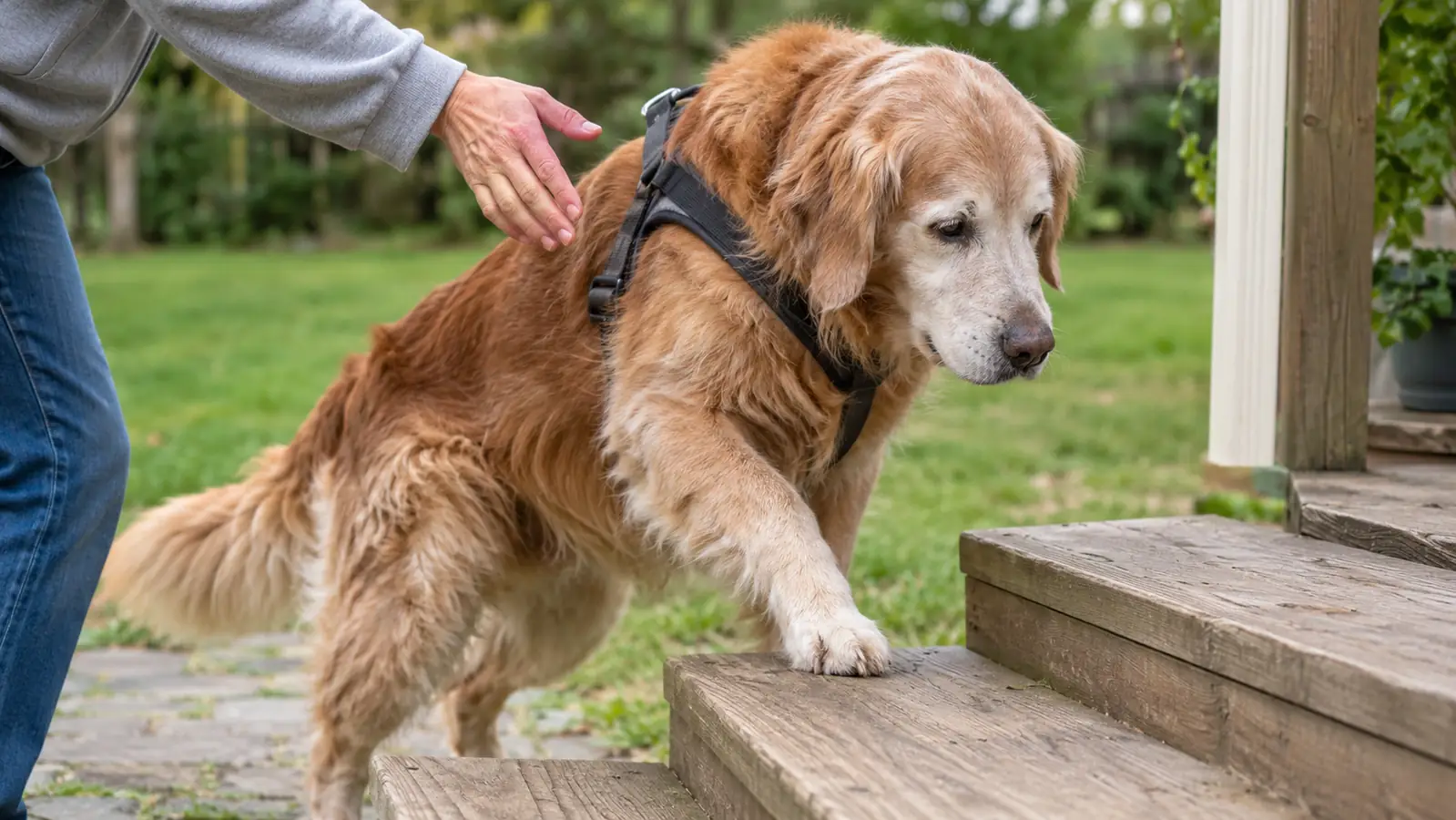
What that support looks like in practice is a dog who moves a little more easily at the edges of the day. The first trip down the back steps. The slow circle before lying down. The walk that used to end early. If your dog is yelping when he stands, holding a leg up, dragging a paw, or unwilling to put weight on a limb, you are not shopping for a supplement, you are booking an appointment. I cannot count the owners who came in three months late with a dog that had been limping since spring and told me the glucosamine had not helped. It was never going to. That is not what it is for.
There is also a difference between a dog who is stiff and a dog who is hurting in a way a tablet cannot touch. Our vet used to say that joint supplements buy you comfort at the margins, and that the margins are where an older dog lives. I have held onto that. If Biscuit's hips are a five out of ten on a cold morning, the tablet might make it a four. A four is not nothing when you are ten years old and the floor is hardwood. It is also not a five turning into a one, and any product page that promises you that is selling to your hope rather than to your dog.
What Nobody Tells You About the Label
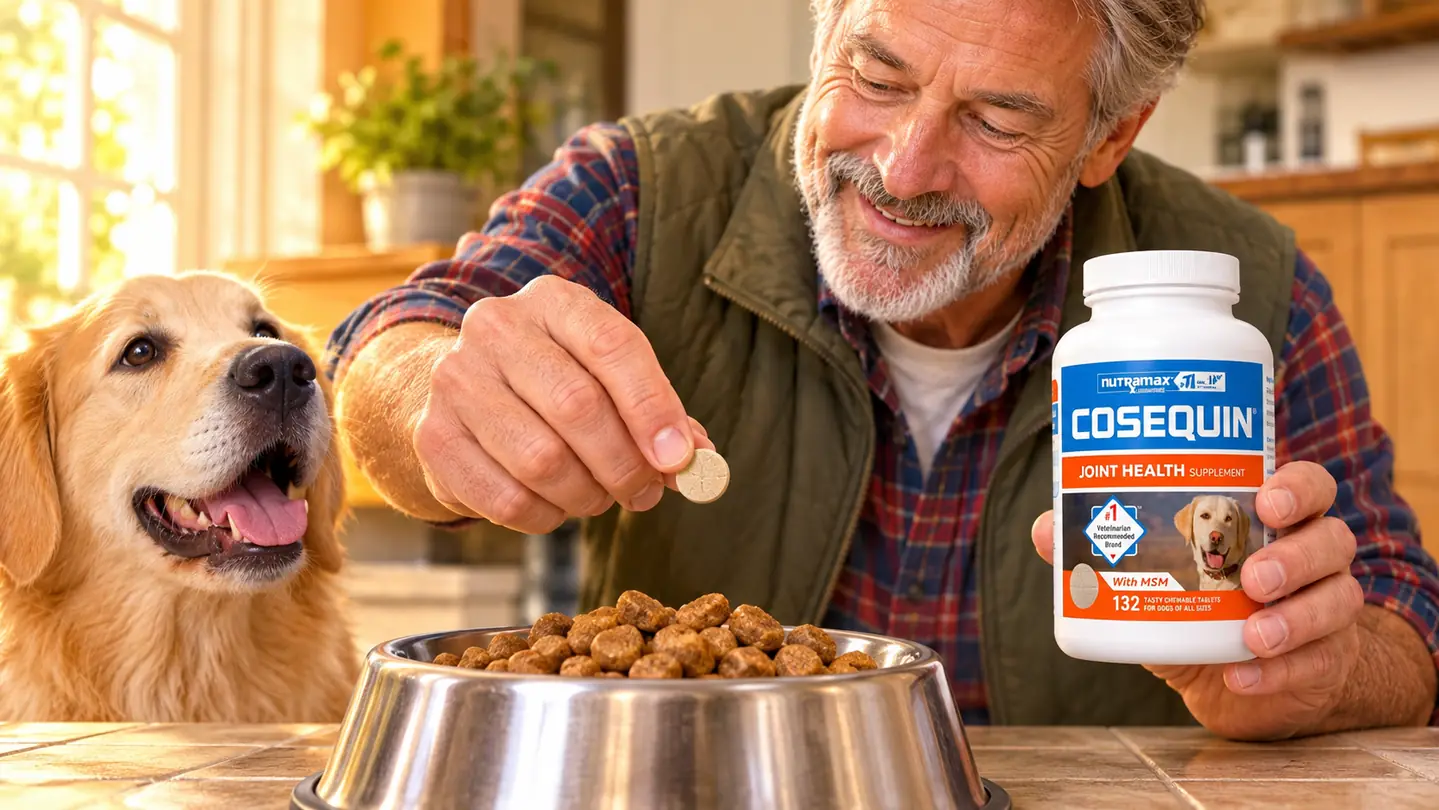
The bottle I buy holds 132 chewable tablets. Read that word again: chewable tablet, not a soft chew. That matters more than the marketing suggests, because a tablet is harder to hide in a bowl than a squishy treat, and a lot of dogs will eat one and a lot of dogs will spit it onto the floor and stare at you. Biscuit takes his dry, straight from the hand, which is luck and not a recommendation. If your dog is a spitter, ask your vet whether the tablet can be crumbled over food. The directions on the bottle are weight based, and a 78-pound Labrador and a 12-pound terrier are not getting the same amount, so read them instead of guessing from what the neighbor gives her dog.
The line on the package about being the number one vet recommended retail joint health supplement brand is doing more work in your head than it should. It comes from surveys of veterinarians about retail brands, and it tells you something real: vets trust this company enough to name it. It does not tell you this tablet will work on your dog, and it is not a study pitting Cosequin against every rival on the shelf. What backs it up is time. Nutramax Laboratories has been in pet health for more than 25 years, and in a category full of labels that appear for two years and vanish, longevity is worth something. The sourcing does not change every time a supplier does.
Those codes after the ingredient names, FCHG49 and TRH122, are the company's own identifiers for the grade of raw material it buys. It is a quality control story, not a clinical trial, and I would rather you understand the difference than be impressed by letters. What it means practically is that the glucosamine in the bottle is specified, not whatever arrived on the pallet that month. The MSM in the formula is worth noting too if you are comparing labels, because plenty of cheaper tablets leave it out and lean on glucosamine and chondroitin alone. For a fuller comparison of how the formula stacks up against a plain glucosamine product, that is a separate conversation worth having before you spend anything.
How It Has Gone With Biscuit
We started in October, which in central Kentucky means the cold mornings arrive right when you begin, so there was no mistaking the season for the supplement. I put a note on the fridge with the start date, because I had told a hundred owners to do exactly that and it seemed rude not to. The first month, nothing. I want to be plain about that, because this is the point in most reviews where the writing starts to sell. Around ten weeks in, I noticed the back steps. Biscuit was still taking them one at a time, still with that little hitch, but he was no longer stopping at the top to think about it. That was the whole change. It was not a transformation, and I would not have believed anyone who called it one.
The trouble with crediting the tablet is that we changed other things at the same time, which is what people do. He went from one long walk to two shorter ones. We put a cheap runner rug at the bottom of the steps so his back legs had something to grip. I trimmed his nails more often, because long nails change how a dog stands. Our vet raised the subject of his weight and I cut back the scraps from the table. Any one of those could explain a small improvement. That is the honest problem at the center of every supplement review you will ever read, including this one.
The bottle itself is small, eight ounces, and it sits on the pantry shelf where I keep the things I do not want to forget. What I did not expect was how much of the routine would become about the bottle rather than the dog. Twice a day I open it, twice a day I count tablets, twice a day I check that the lid is tight because the label says to keep it dry. For six months that has been the ritual, and it is the least glamorous part of this whole business. It is also the part that decides whether any of it works, since a supplement that gets skipped three days a week is not a supplement you can judge.
One more thing about this bottle: it is labeled for dogs. Juniper, our 8-year-old gray tabby, gets nothing from it, and her stiff days are a separate conversation with our vet that we have not had yet. The bottle sits on the pantry shelf next to the cat food, and I have caught myself twice reaching for the wrong container in the morning, so the two now live on different shelves. If you share a house with a dog and a cat, separate shelves is not fussiness. It is the difference between a label that gets read and a mistake that gets made at seven in the morning before your coffee.
What I Liked
- Three actives named on the label instead of folded into a blend
- Made by a company that has been in pet health for more than 25 years
- A tablet, so it does not leave grease or crumbs in a pocket
- Widely stocked, so you are unlikely to run out in the middle of a trial
- More than 93,000 Amazon ratings averaging 4.7, which at least tells you the bottle arrives and most dogs eat it
Where It Falls Short
- Tablets are harder to hide in food than soft chews
- No change at all in the first month for us
- Does nothing for coat, weight or nails
- You have to give it daily for months before you can judge it
- A monthly cost with no end date
What It Did Not Do
Cosequin did nothing for Biscuit's coat, and it was never going to. His winter flakiness is a fat and fatty acid conversation and it lives in a different aisle. It did not give him energy, it did not change his appetite, and it did not silence the clicking of his nails on the kitchen floor, which I have decided to stop worrying about because our vet says the floor is the problem and not the dog. It also did not make him younger. A 10-year-old Lab with a grumbly hip is still a 10-year-old Lab with a grumbly hip, and a tablet is not a time machine.
What it did do, and I think this is the realistic ceiling for any product in this category, is shorten the warm-up. The first few steps after a nap are still his worst steps. There are just fewer of them, and they are shorter. In a dog who has maybe four or five good years left, that is the thing you are actually buying. Not a cure, not a reversal, a shorter warm-up on a cold morning.
Six months in, Biscuit still takes the back steps one at a time. He just takes them without the pause at the top.
The Tradeoffs Nobody Puts on the Box
You are running a study with one dog, no control group, and a memory that wants to see improvement because you have already spent the money. That is the truth about every joint supplement on the market. I have watched owners swear a product worked and other owners swear the same product was sugar pills, and both of them were describing a dog they loved. The only defense is to write the start date on the bottle and give it long enough to give you an answer. Eight to twelve weeks was our vet's rule for any joint supplement, and if there was no difference at all by then, he was the first to say stop paying for it.
The other pattern I saw constantly was the quitting pattern. The bottle runs out, life happens, three weeks go by, and the owner decides it never did anything. Or the opposite: someone adds a new food, a new chew and a new tablet in the same month, then cannot tell you which one helped, only that the dog is better. If you are going to try this, change one thing. That is the dullest advice in this article and the most useful. Nutramax Laboratories cannot help you with that part, and neither can any label on any shelf.
What to Ask Your Vet Before You Open the Bottle
Bring the bottle with you, and bring the other bottles too, including the ones you do not think of as medicine. Ask whether anything your dog already takes interacts with glucosamine, chondroitin or MSM. Ask whether the stiffness you are seeing is joint pain or something else entirely, because a dog who is slow to rise can be slow for reasons that have nothing to do with cartilage. Ask how long a fair trial is for your dog's age and weight. Ask what would make them say stop. Ask whether the weight is a factor, because it usually is.
And write the date on the bottle in marker before you open it. That one came from a technician I worked beside for 19 years, and it has settled more arguments in more kitchens than any product claim I can name. When you can see the date, you can have an honest conversation with your vet about whether this is working, instead of a vague feeling in either direction.
Who This Is For
This is for the owner of a middle-aged or older dog with mild, grumbly stiffness, the kind that shows up on cold mornings and after long naps and does not stop the dog from doing anything. It suits a dog who will take a tablet, and an owner who can give it daily for two to three months without expecting a change in week one. It suits someone who is already doing the boring things: keeping the weight down, keeping the walks short and frequent, keeping the floors from being a skating rink. Biscuit fits every one of those descriptions, which is why the bottle stays on the pantry shelf. If that is your house too, a product from Nutramax Laboratories is a reasonable place to start the conversation with your vet.
Who Should Skip It
Skip it if your dog is limping now, holding up a leg, or reluctant to bear weight, because that dog needs a diagnosis and possibly a pain plan, and a supplement will only delay both. Skip it if your dog is young and the stiffness came on after a fall or a hard run, since that is an injury question. Skip it if your dog spits tablets and will not take a crumbled one over food, because a supplement your dog will not swallow is a supplement you will stop buying. And if you are shopping for a cat, close this page and call your vet, because this bottle is labeled for dogs.
If you are going to try it, try it long enough to know
Write the date on the bottle. Give it daily. Keep the rest of the routine steady for a couple of months. Then ask your vet the honest question and let the answer be whatever it is.
Amazon Check Today's Price on Amazon →