
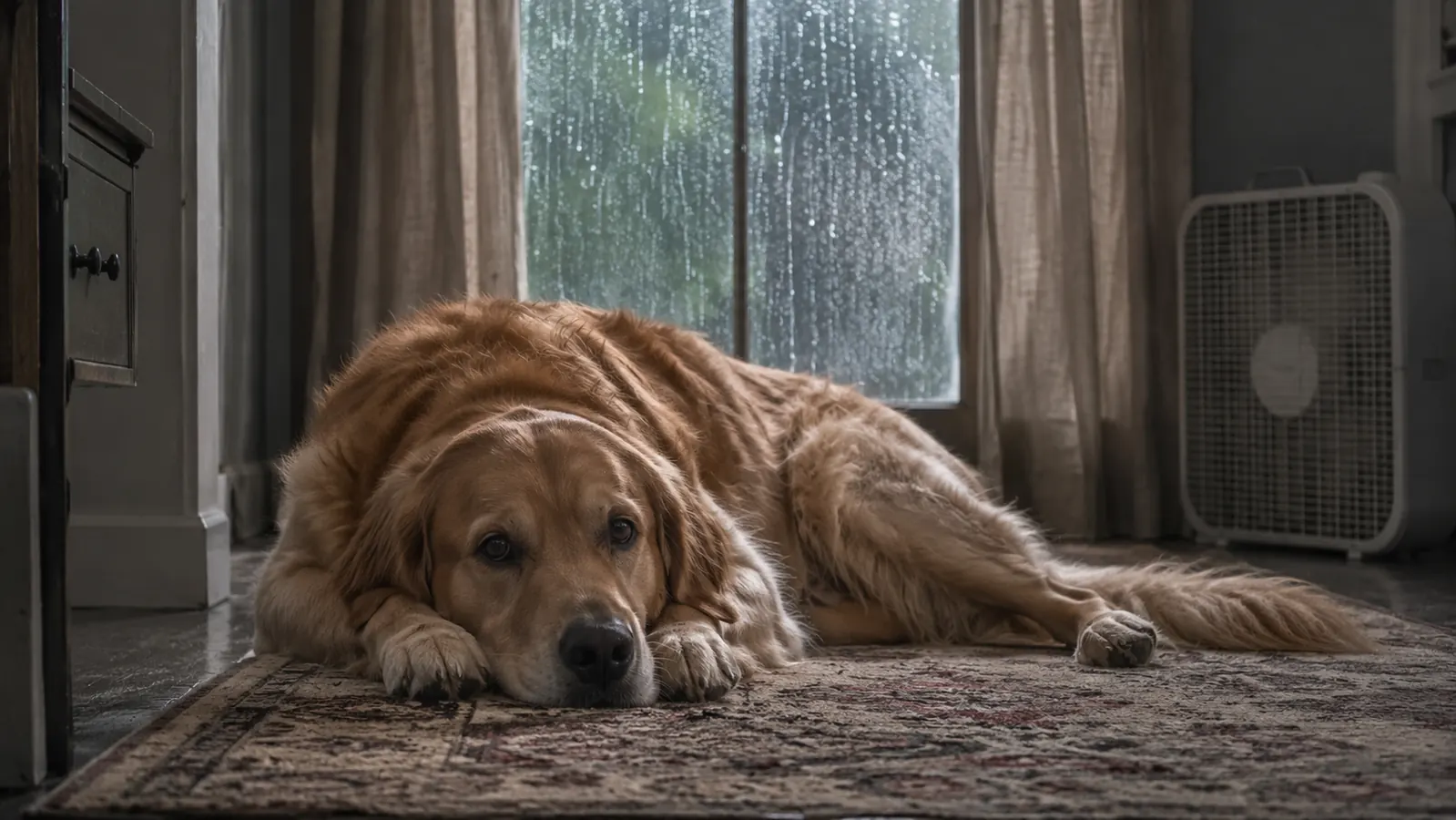
Biscuit hears the thunder before I do. He is a 10-year-old yellow Labrador, 78 pounds, and roughly twenty minutes ahead of the weather radio. He starts pacing the hallway, panting, and trying to fold all of himself under my desk. I spent 24 years at the front desk of a small-animal clinic in Lexington, and storm fear was one of the three things owners asked me about most, right behind itchy skin and sore hips. So I am not going to pretend this is unusual or that I have some rare insight. I have a frightened dog and a routine that mostly works.
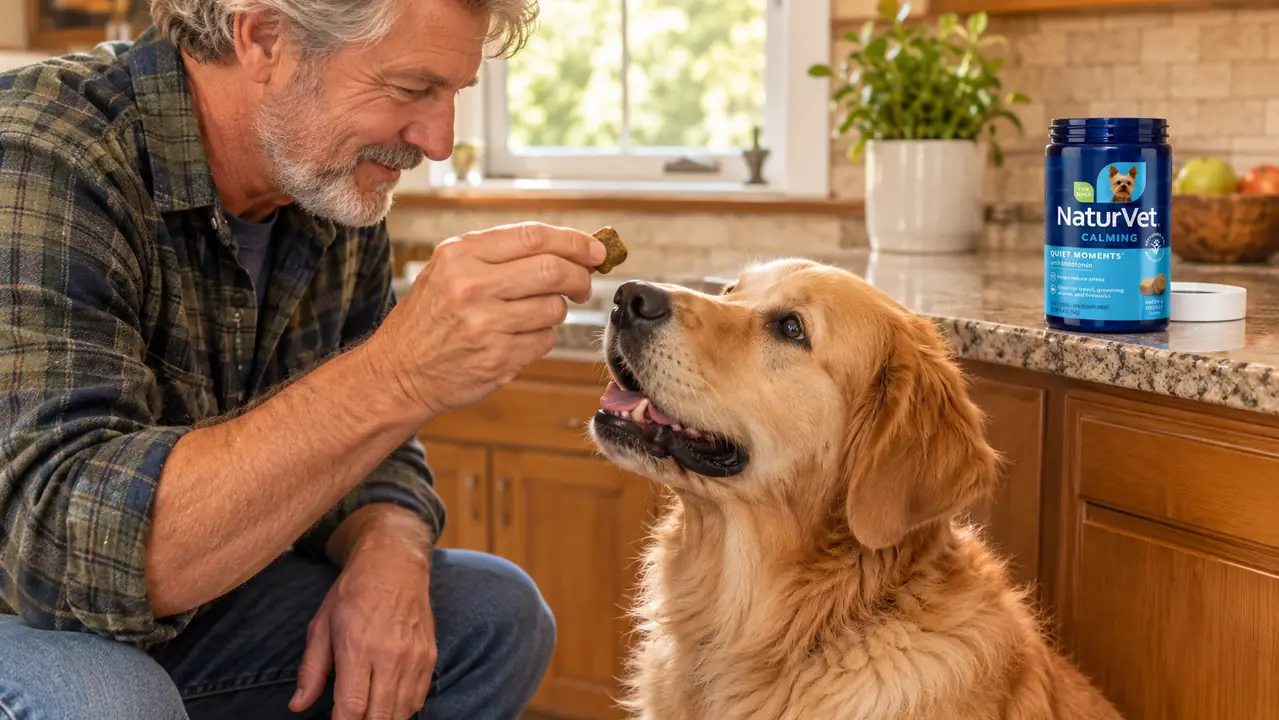
NaturVet Quiet Moments is the chew that lives on the pantry shelf now, next to the joint chews and the dental ones. I want to be straight with you about what it does, because the label is not going to say this part. It is not a sedative. It will not turn a terrified dog into a sleepy one, and it will not stop the thunder. What it does in this house is take the edge off early enough that the rest of my routine can actually reach him. That is the whole job, and everything below is built around it.
The Chew I Reach For Before the First Rumble
NaturVet Quiet Moments is a melatonin soft chew with chamomile, ginger, thiamine and L-tryptophan, made for dogs of any breed size, 70 chews to a container. It lives in the pantry, not the medicine cabinet, because you want it in your hand before the storm rather than after. Have a look at today's price and read the label with your own vet.
Amazon Check Today's Price on Amazon →Step 1: Catch the Fear Before the First Rumble
The window you have is smaller than you think. A dog who is already shaking, drooling and clawing at the door is well past the point where a chew helps. The useful moment is earlier, when he first lifts his head and goes still, or when he starts following you from room to room for no reason he can explain and neither can you.
Watch for the small stuff. Ears back. Yawning when he is not tired. Licking his lips. A tail carried lower than usual. Biscuit does what I call the shadow walk, where he stays exactly six inches from my left leg and will not be shaken off for anything. Some dogs go the other direction and hide behind the washer, which is Juniper's move, and she is a cat, so this particular chew is not for her. Know which kind of dog you have.
It also helps to know which part of the storm your dog is actually reacting to. Some react to the boom. Some react to the pressure drop that arrives well ahead of the rain, which is why your dog may be pacing before there is a cloud in the sky. Some react to the flicker of lightning through the blinds. Figure out which one sets yours off and you will know how much warning you get, and that number decides the rest of your plan.
Step 2: Give the Chew Early, Not Mid-Panic
Here is the test I used at the clinic and still use at home. Offer food during a storm. A dog in full panic will refuse it. Not because he is being difficult, and not because the chew failed, but because a dog in survival mode does not eat. That refusal tells you the window has closed. Next storm, start earlier, and do not waste a chew on a dog who cannot swallow it.
NaturVet Quiet Moments is built around melatonin, with L-tryptophan, thiamine, chamomile and ginger alongside it. Melatonin is the ingredient most owners have already heard of. The thiamine and L-tryptophan in the blend are the reason I reach for this one instead of a plain melatonin tablet, though I will tell you honestly that no chew works the same way on every dog, and anyone who says otherwise is selling you something.
Give it according to the label for your dog's weight, and give it once. Doubling up because the first one seems slow is how people end up with a groggy dog and a worse evening. If your dog is already on medication, or has a condition your vet manages, make that phone call before storm season starts rather than during one. That is not a disclaimer I am required to write. It is the advice I gave across that front desk for 24 years, and I gave it to people who were already upset.
Step 3: Build a Safe Room Before You Need It
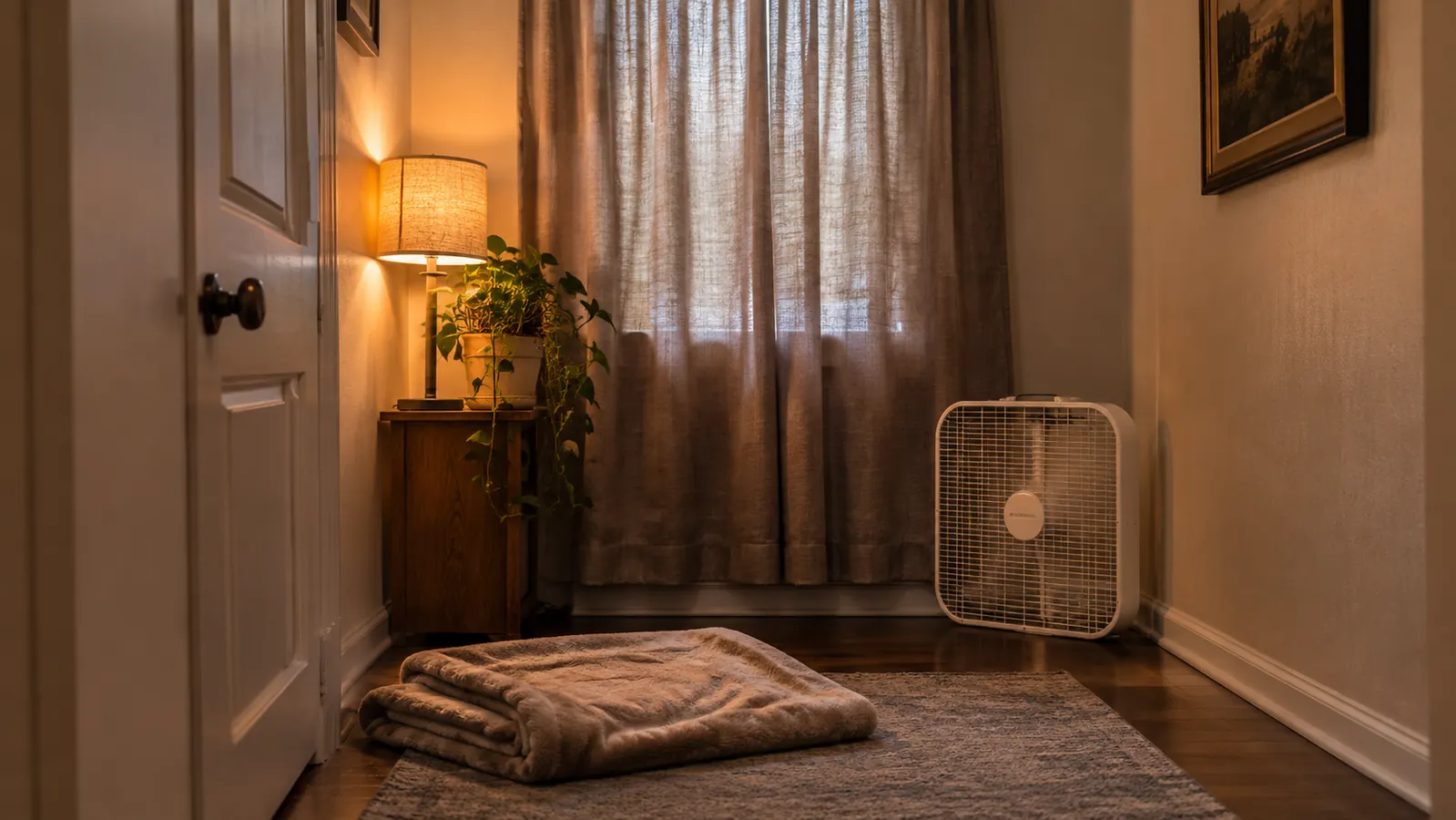
Pick the room on a sunny day. Interior wall if you have one, no window if possible, away from the doors. In our one-story brick house that is the hall bathroom, which is not glamorous and has genuinely terrible lighting, but it is quiet and it is boring in exactly the way a frightened dog needs. Boring is the goal. Resist the urge to make it cozy and interesting.
Do not shut a dog into a crate he has never used before. Some dogs feel safer in a covered crate and will put themselves inside one, which is a gift. Others will hurt themselves trying to get out of a door that closes on them. Leave the door open and let him choose. If your dog wants the space under the desk, then the space under the desk is the safe room, and I am not going to argue with him about the floor plan.
Add steady sound. A box fan on low does two jobs at once: it covers the low rumble and it gives the room a constant noise to listen to instead of a scary one. Add a blanket, and one thing that smells like you. Then leave it alone. The first time your dog sees that room should not be the worst night of the summer.
A dog in full panic will not take food. That refusal means you were late, not that the chew failed.
Step 4: Change What Your Dog Hears and Sees
Close the curtains and turn the lights on. A good share of storm fear is visual, and the flash sets off the second wave. A lit room makes the flash less dramatic. It also stops your dog from standing at the sliding door watching the sky, which is a job he is not qualified for and cannot stop doing once he has started.
Then cover the sound with something ordinary. A television at normal volume. Talk radio. A podcast. Not loud enough to compete with the thunder, because you will lose that contest and you will just have added noise to a bad night. Ordinary volume, ordinary voices. The point is to give the room a sound that is not the weather.
On calm days you can do more. Play a thunder recording at a volume so low your dog barely lifts his head, and drop a treat every time it plays. Raise the volume a little each week. This is slow work that takes months, and I will not pretend it cured Biscuit. It did take the top off. Combine it with the chew and the safe room and you have three small tools instead of one large hope.
Step 5: Stay Calm Yourself, Then Reward the Calm
Ray will tell you I am the calm one in this house, and Ray is being generous. Dogs read us. If I am standing at the window counting the seconds between the flash and the boom, Biscuit is reading my posture and deciding the situation is serious. The single most useful thing I do during a storm is sit down and do something ordinary, badly, with the television on.
Reward settled behavior quietly. Not a party, not a big fuss, no high voice. A treat dropped between his paws while he is already lying down and not pacing. If you reward the pacing, you will get more pacing. If you reward the lying down, you may eventually get more lying down. It is not fast and it is not fair, but that is how it works with a dog.
And do not force affection. Some dogs want to be held through a storm, and some want to be under the bed and left completely alone, and making a scared dog accept comfort he did not ask for usually backfires on both of you. Offer, then let him decide. Juniper hides behind the washer until it is over and then strolls out as if nothing happened. Different species, same principle.
What Else Helps
Talk to your vet before you build an entire system around a supplement. I say that because I spent 24 years watching people buy a great deal before asking a free question. There are prescription options for storm phobia, and they genuinely help dogs who need more than a chew and a fan. There is no prize for managing it alone, and a dog does not get extra credit for suffering through it.
A pressure wrap helps some dogs and does nothing whatsoever for others. Pheromone sprays and plug-ins are the same story. White noise machines, weighted blankets, and giving a dog a job to do during the storm all work in some houses and not in others. You are going to have to try a few things and keep what works for your dog. That is the honest answer and I know it is not a satisfying one.
One thing I will say for NaturVet Quiet Moments: it carries more than 36,000 ratings and sits at 4.0 out of 5, which is exactly the shape you would expect from a calming chew that does a real job. It works well for a lot of dogs, it does nothing for a smaller group, and the reviews saying so are not wrong. That is what a real supplement looks like. A perfect score would tell you more about the marketing than the product.
Keep the container where you can reach it in the dark. Ours sits on the pantry shelf at eye level next to the dental chews, because a storm at two in the morning is not the moment to be reorganizing the kitchen. Seventy chews to a container is enough that I am not rationing them, and small enough that the container does not take over the shelf it sits on.
Have It on the Shelf Before the Next Storm
You cannot buy calm in the middle of a panic, and neither can I. You can put a container of NaturVet Quiet Moments on the pantry shelf this week, read the label, ask your vet the one question you have been putting off, and be ready the next time the pressure drops. That is the whole plan, and it is a good one.
Amazon Check Today's Price on Amazon →